Beware of Fake iPhone Pre-Order Scams
Scammers have created fake websites mimicking Apple to trick people into believing they can pre-order a new foldable iPhone with discounts or vouchers. These sites use urgent timers and may try to steal personal information or even infect phones if they are not updated.
By The Junior Post
Published
Recommended for ages 10+. Editorial guidance, not a guarantee of individual suitability.
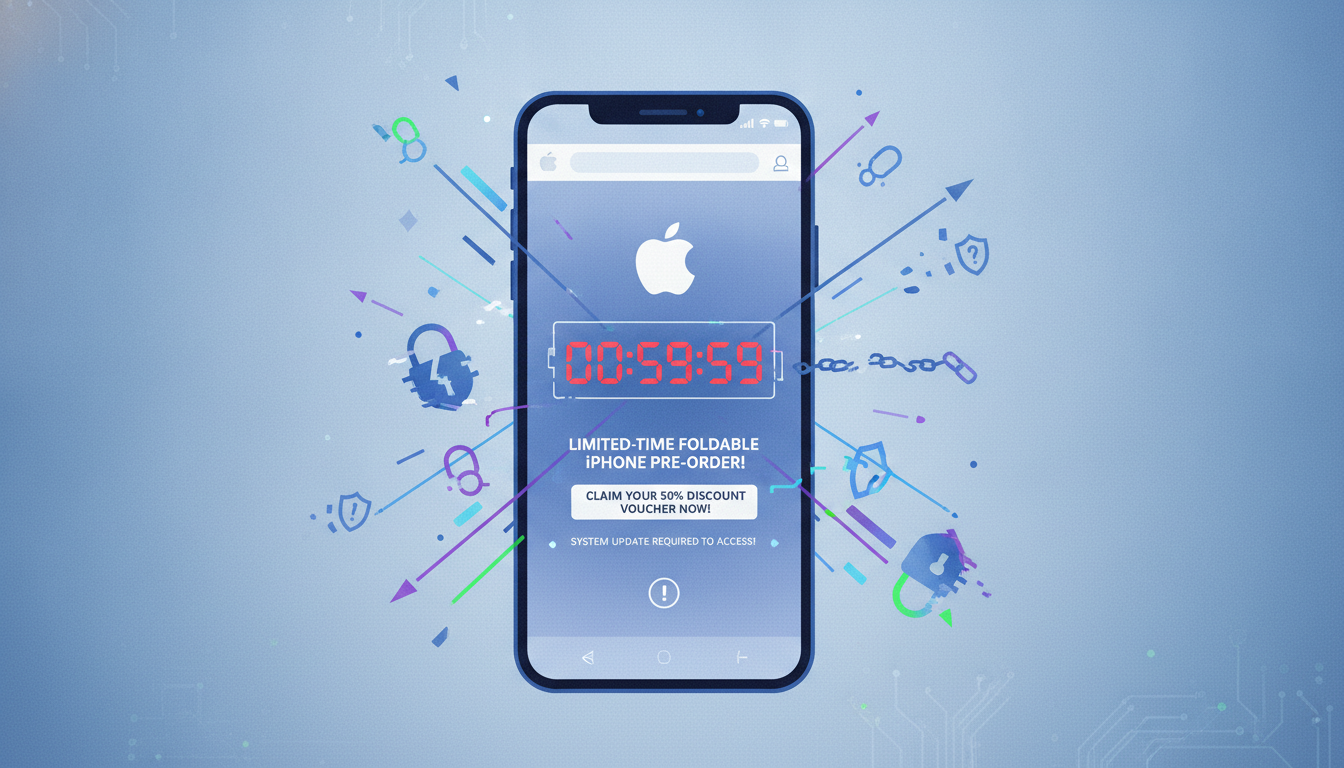
Following Apple's announcement of its first foldable iPhone on September 9, 2026, and before official pre-orders began on October 16, scammers quickly set up fake websites. These websites were designed to look like official Apple pages, offering tempting deals such as a 25% discount or a $500 voucher for the new phone.
These fraudulent sites often used tricks to make people act fast, like a countdown timer that suggested the offer would end soon. They would ask for contact details and shipping addresses, claiming a manager would call later to confirm delivery and payment. This tactic is often the first step in a scam that could lead to people losing money.
A serious danger with some of these fake pre-order pages is that simply opening them on an older iPhone could start a harmful process called the DarkSword exploit chain. This exploit could try to steal important information like saved passwords, cryptocurrency wallet data, and notes from the phone. However, iPhones with updated software (iOS 27 or later) are protected from this specific attack, as Apple had fixed the DarkSword exploit in March 2026.
Experts like Kaspersky and Malwarebytes have warned people to be careful. They advise keeping iPhones updated, avoiding links from unknown sources, and if a suspicious page is opened, to update and restart the device, and change any passwords that might have been exposed.
Knowledge Vault
Online Scams
Online scams are dishonest attempts to trick people, often using the internet. Scammers might create fake websites, send misleading emails, or make false offers to get people to give them money, personal information, or access to their devices. These scams often look very convincing, mimicking real companies or trusted sources.
Software Updates
Software updates are new versions of programs or operating systems that fix problems, improve performance, and add new features. Importantly, updates often include security patches that close weaknesses (vulnerabilities) that hackers could exploit. Keeping software updated is a key way to protect devices from cyber threats.
Phishing
Phishing is a type of online scam where attackers try to trick people into revealing sensitive information, like usernames, passwords, and credit card details. They often do this by pretending to be a trustworthy entity, such as a bank, a popular online service, or a well-known company like Apple, through fake emails or websites.
Check your understanding
- What was one common tactic used by the fake iPhone pre-order websites?
- Offering free accessories with every purchase.
- Using a countdown timer to create urgency.
- Requiring payment in cryptocurrency only.
- Asking users to visit a physical store for confirmation.
- What kind of information could the DarkSword exploit chain attempt to steal?
- Only the user's favorite color.
- Saved credentials, cryptocurrency wallet data, and Apple Notes content.
- The user's height and weight.
- Information about the weather.
- How can iPhones be protected from the DarkSword exploit chain?
- By never turning off the phone.
- By keeping the software updated to iOS 27 or later.
- By only using the phone indoors.
- By avoiding all websites.