Cyberattack Disrupts Supermarket Refrigeration Across Europe
A cyberattack has reportedly targeted refrigeration systems in supermarkets across Europe, affecting stores in France and Ireland. Hackers are alleged to have forced continuous defrost cycles and raised temperatures, leading to some food spoilage and disruptions in food supply.
By The Junior Post
Published
Recommended for ages 10+. Editorial guidance, not a guarantee of individual suitability.
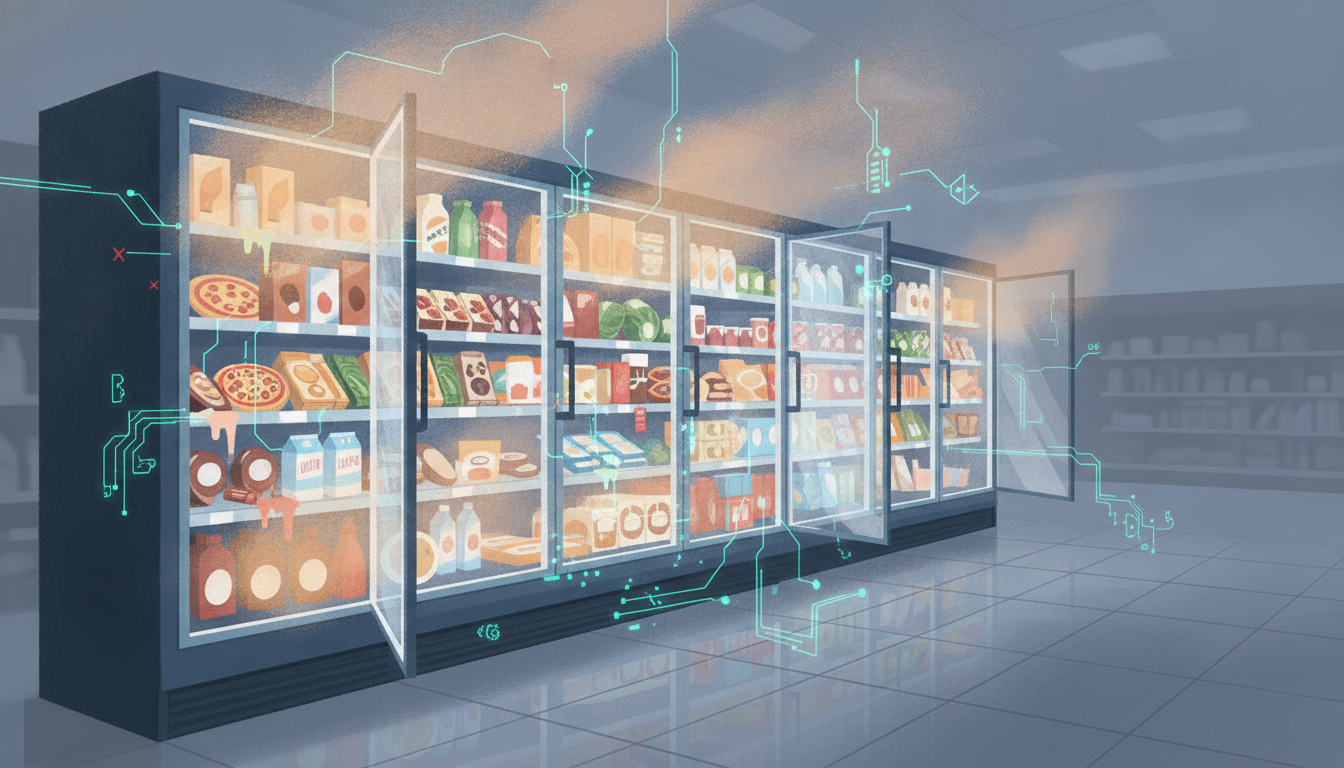
Supermarkets across Europe have reportedly faced a cyberattack that targeted their refrigeration systems. This incident has affected stores in countries like France and Ireland, causing problems with keeping food chilled and frozen.
The attack is alleged to have involved hackers remotely forcing refrigeration systems into a continuous defrost cycle and setting temperatures as high as 50 degrees Celsius. This meant that instead of keeping food cold, the systems were warming it up, which can lead to food spoiling.
In France, Groupement Mousquetaires, which runs Intermarché and Netto stores, reported that about 300 of its stores were affected. While many stores managed to prevent major disruptions, some had to throw away food. Carrefour also stated that 80 of its supermarkets were attacked, though most of its 6,000 stores were not affected.
Ireland also saw issues, with 13 SuperValu stores experiencing problems with their refrigeration. As a precaution, these stores removed chilled and frozen products from their shelves. The Paris prosecutor's office has started an investigation into the large-scale attack, looking into damage from spoiled food and reported fires.
Dominique Schelcher, chief executive of Cooperative U, described the attack as "unprecedented" and "extremely serious." Christophe Hansen, the EU Food and Agriculture Commissioner, condemned the attack, noting that targeting food supply is a new reality that needs more attention. It was indicated that many of the affected systems were older products from Danish manufacturer Danfoss, which were no longer receiving software or security updates.
Knowledge Vault
Cybersecurity
Cybersecurity is about protecting computer systems, networks, and data from digital attacks, damage, or unauthorized access. It's like having strong locks and security guards for digital information and systems to keep them safe from hackers. In this story, the lack of security updates on older systems made them vulnerable.
Food Supply Chain
A food supply chain is the journey food takes from where it is grown or produced to when it reaches your plate. This includes farming, processing, packaging, transporting, and selling. When a part of this chain, like supermarket refrigeration, is disrupted, it can affect the availability and safety of food.
Software Updates
Software updates are improvements or fixes released for computer programs or operating systems. They often include security patches that close weaknesses hackers could use to attack a system. Keeping software updated is important for protecting against cyberattacks.
Check your understanding
- What was the main effect of the cyberattack on supermarket refrigeration systems?
- It caused the refrigeration systems to freeze food too much.
- It made the refrigeration systems stop working completely.
- It forced the refrigeration systems to defrost continuously and raise temperatures.
- It changed the prices of food items in the stores.
- Why did some supermarkets have to discard food after the cyberattack?
- The food was stolen by the hackers.
- The refrigeration systems were damaged beyond repair.
- The food spoiled because it was not kept cold enough.
- Customers refused to buy any food from the affected stores.
- According to the article, what was a possible reason why some refrigeration systems were more vulnerable to the cyberattack?
- They were too new and had untested software.
- They were older products that no longer received software or security updates.
- They were made by a different manufacturer than the other systems.
- They were located in stores with weaker physical security.