First Human Case of Shamonda Virus Reported in France
A patient in France, who was already seriously ill, has died after being infected with the Shamonda virus, marking the first recorded human case of the disease. The virus, typically found in livestock, is believed to be transmitted by midge bites, but experts say the risk to the general public appears very low.
By The Junior Post
Published
Recommended for ages 10+. Editorial guidance, not a guarantee of individual suitability.
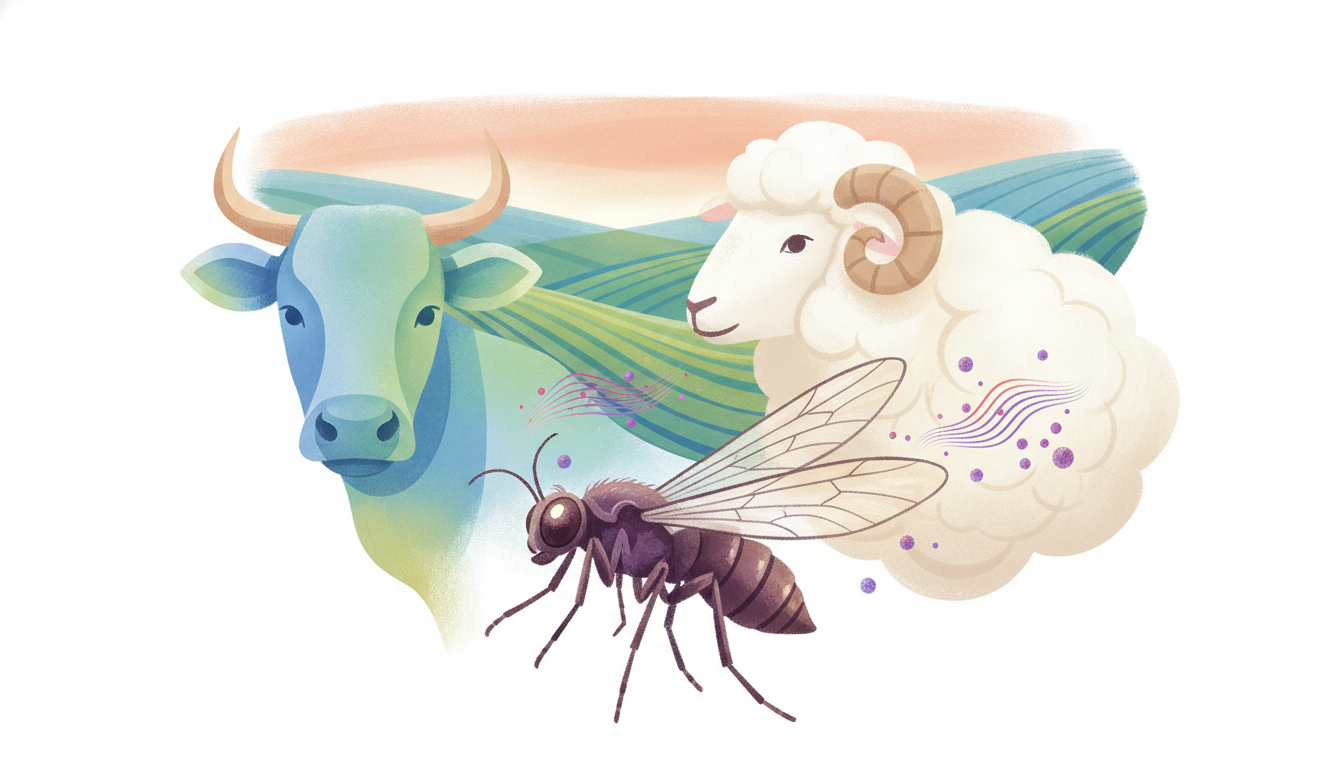
In October 2026, French authorities announced the first known human infection with the Shamonda virus. The patient, a man in his 60s from the Lyon area, was already hospitalized for a serious, unrelated illness and had a severely weakened immune system. He died in early October.
The Shamonda virus is usually found in livestock such as cattle, sheep, goats, horses, and alpacas. In these animals, it can cause problems like diarrhea, loss of appetite, reduced milk production, miscarriages, and birth defects in newborns. It has also been found in the brains of horses in Switzerland and Germany that died from neurological symptoms.
It is thought that the virus is spread through the bites of tiny insects called midges. The patient is suspected to have been bitten by a midge carrying the virus in eastern France, where the virus had been circulating among animals during the spring and summer of 2026.
The Shamonda virus was first discovered in Nigeria in the mid-1960s. It was confirmed in Europe in late July 2026 after tests on sick cattle in southern Germany, Switzerland, and eastern France. Despite this first human case, health officials, including the European Centre for Disease Prevention and Control (ECDC) and the World Health Organization (WHO), have stated that the risk to the general public appears very low.
Professor Tom Solomon, director of the Pandemic Institute at the University of Liverpool, noted that this is the first recognized human infection even though the virus has been present in animals for many years. The WHO is working with French authorities to investigate how the infection started, how it spread, and any possible risks to public health. Currently, there are no vaccines available for the Shamonda virus.
Knowledge Vault
Virus Transmission
Virus transmission is how a virus spreads from one host to another. This can happen in many ways, such as through direct contact, airborne droplets, contaminated surfaces, or through vectors like insects. Understanding transmission helps scientists and doctors prevent the spread of diseases.
Zoonotic Diseases
Zoonotic diseases are illnesses that can be passed from animals to humans. Many diseases, like the flu or rabies, are zoonotic. Scientists study these diseases to understand how they jump from animals to people and how to stop them from spreading further.
Immune System
The immune system is your body's natural defense against infections and diseases. It is made up of special cells, tissues, and organs that work together to protect you from harmful germs like viruses and bacteria. When someone is 'immunocompromised,' their immune system is weaker than usual.
Check your understanding
- What type of animals are primarily affected by the Shamonda virus?
- Fish and birds
- Dogs and cats
- Cattle, sheep, and goats
- Reptiles and amphibians
- How is the Shamonda virus believed to be transmitted?
- Through contaminated water
- By direct contact with infected animals
- Through midge bites
- By eating uncooked meat
- Why do health experts believe the risk of Shamonda virus to the general public is low?
- Because there is a widely available vaccine
- Because the virus only affects very old people
- Because this is the first human case despite the virus circulating in animals for many years, and the patient was already very ill
- Because the virus cannot survive outside of animals