Fundamental Rights vs. Fundamental Duties: Understanding Your Freedoms and Responsibilities in India
In India, citizens have both Fundamental Rights and Fundamental Duties. Fundamental Rights are freedoms protected by the Constitution, which means the government cannot easily take them away. Fundamental Duties are responsibilities citizens are encouraged to follow, added to the Constitution in 1976.
By The Junior Post
Explainer · First published
Recommended for ages 10+. Editorial guidance, not a guarantee of individual suitability.
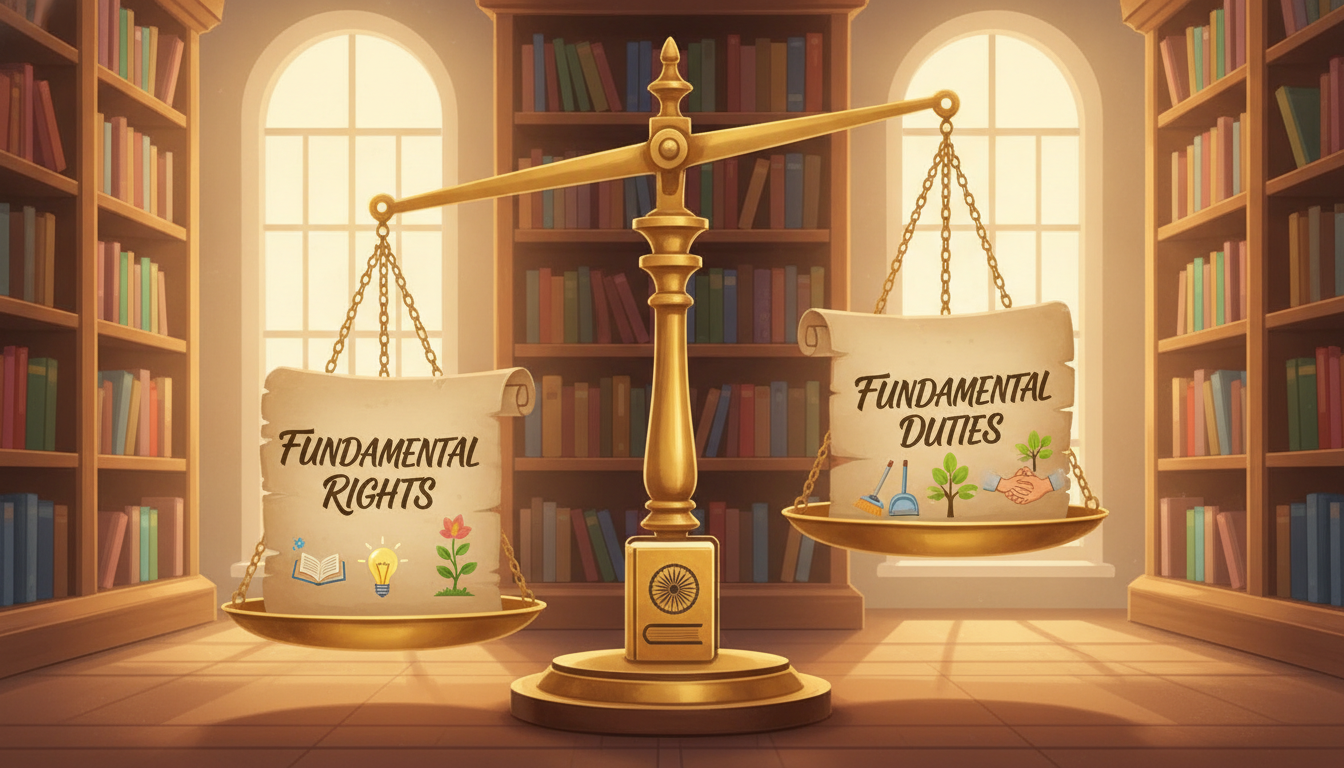
Fundamental Rights are special protections for citizens in India. They are different from other legal rights because they are directly protected and guaranteed by the country's Constitution. This means that ordinary laws cannot easily change them. If an ordinary law needs to be changed, the legislature can do it through a regular law-making process. However, to change a Fundamental Right, the Constitution itself must be amended.
The government, including all its parts, cannot act in a way that goes against Fundamental Rights. The judiciary, which includes courts like the Supreme Court, has the important job of protecting these rights. If someone believes their Fundamental Rights have been violated by government actions, they can ask the Supreme Court for help.
In 1976, a list of Fundamental Duties for citizens was added to the Constitution through the 42nd amendment. There were originally ten duties listed. These duties suggest goals and objectives for society, certain rights individuals should have in addition to Fundamental Rights, and policies the government should adopt.
It is important to understand that the Constitution does not say that enjoying your Fundamental Rights depends on fulfilling your Fundamental Duties. This means that even with the addition of Fundamental Duties, the special status and protection of Fundamental Rights have not changed. Citizens still have their rights, regardless of whether they fulfill their duties.
Knowledge Vault
Fundamental Rights
Fundamental Rights are special rights given to citizens that are protected and guaranteed by the country's Constitution. This means they are very important and cannot be easily changed or taken away by the government through ordinary laws. The judiciary helps protect these rights.
Fundamental Duties
Fundamental Duties are a list of responsibilities for citizens that were added to the Constitution in 1976. They suggest goals for society and policies the government should follow, encouraging citizens to contribute positively.
Constitution
A Constitution is a set of basic rules and principles for how a country is governed. It outlines the powers of the government and the rights of its citizens. In India, the Constitution protects Fundamental Rights.
Check your understanding
- What is the main difference between Fundamental Rights and ordinary legal rights?
- Ordinary legal rights are protected by the Constitution, while Fundamental Rights are not.
- Fundamental Rights can be changed by ordinary law, but ordinary legal rights require a constitutional amendment.
- Fundamental Rights are protected and guaranteed by the Constitution, while ordinary legal rights are protected by ordinary law.
- Only Fundamental Rights can be changed by the legislature.
- When were Fundamental Duties added to the Constitution of India?
- When the Constitution was first written in 1950.
- In 1976, by the 42nd amendment.
- In 2002, by the 86th amendment.
- They have always been a part of the Constitution.
- What role does the judiciary play regarding Fundamental Rights?
- The judiciary creates new Fundamental Rights.
- The judiciary can change Fundamental Rights through ordinary law.
- The judiciary has the power and responsibility to protect Fundamental Rights from violations.
- The judiciary decides if citizens have fulfilled their Fundamental Duties before they can enjoy their rights.