Glacial Lake Outburst in Bhutan Prompts Flood Warnings in India
Authorities are monitoring rivers in India after a glacial lake outburst in Bhutan on October 29, 2026. The event has led to flood warnings for several districts in Assam and West Bengal, with residents urged to prepare for possible evacuations.
By The Junior Post
Published
Recommended for ages 10+. Editorial guidance, not a guarantee of individual suitability.
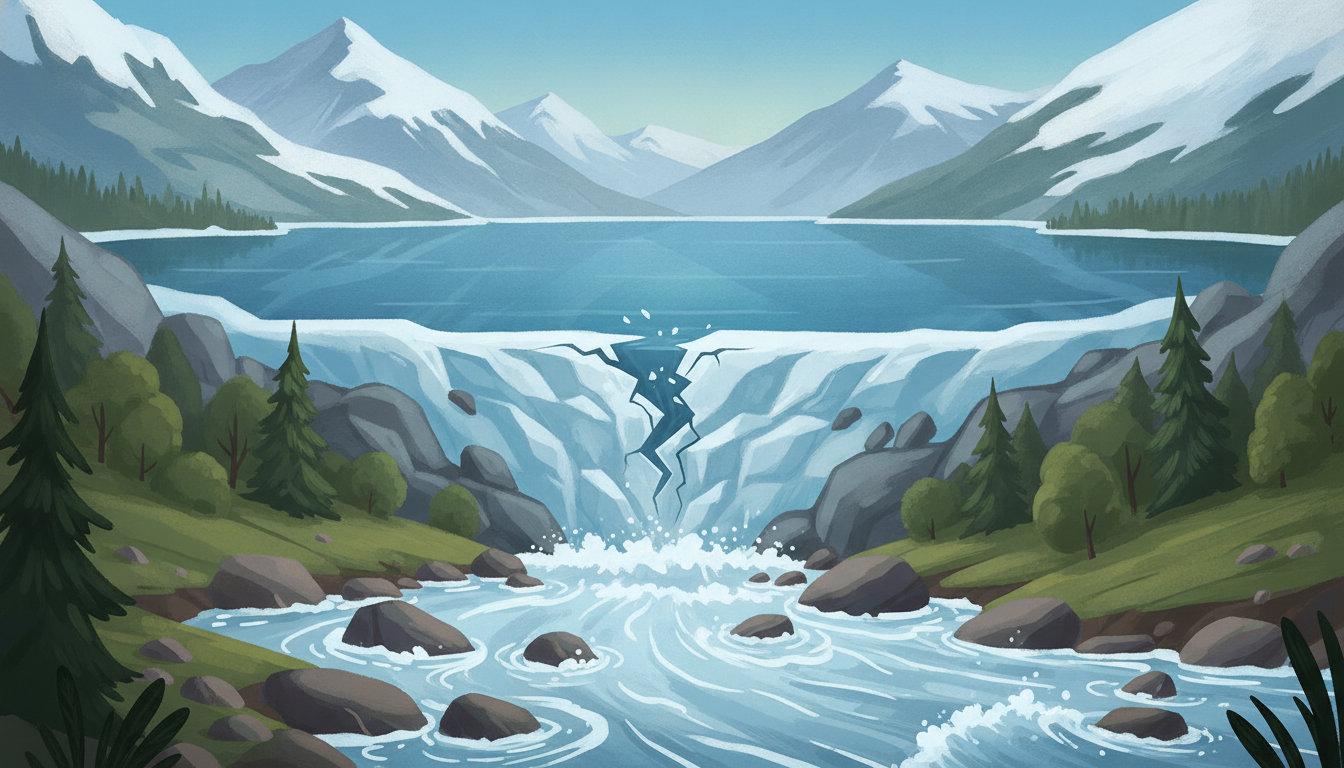
On October 29, 2026, a glacial lake outburst occurred in Bhutan, causing water to overflow from a lake. This event has led to increased monitoring of rivers that flow from Bhutan into India.
The overflowing water is flowing downstream into the Mo Chhu River, which then connects to the Sankosh River. The Sankosh River is known as the Punatsangchhu River in Bhutan.
Authorities are closely watching the Sankosh River for a potential sudden rise in water levels. Shintaphu Lake is one of Bhutan's 17 glacial lakes that are considered potentially dangerous. However, a water-level monitoring station at Taktsimakhang had not sent out an alert at the time of the initial reports.
Following the incident, flood warnings have been issued for several districts in India. These include Kokrajhar, Baksa, Chirang, and Dhubri in Assam, as well as Jalpaiguri and Alipurduar in West Bengal.
Disaster management teams have been sent to vulnerable riverbanks. District administrations have advised people living near these rivers to move to safer places and be ready for possible evacuations. The sudden increase in water levels could threaten buildings, farms, and towns along the rivers.
Knowledge Vault
Glacial Lake Outburst Flood (GLOF)
A Glacial Lake Outburst Flood (GLOF) happens when a natural dam holding back a glacial lake breaks. Glacial lakes are formed by melting glaciers. When the dam breaks, a large amount of water is released very quickly, often carrying rocks, mud, and other debris. These floods can travel far downstream and cause significant damage to areas along the river.
Impact of Rising Temperatures on Glaciers
Rising temperatures, often linked to climate change, cause glaciers to melt faster. This increased melting can lead to the formation of new glacial lakes or the expansion of existing ones. As these lakes grow larger, the pressure on their natural dams increases, making them more likely to burst and cause glacial lake outburst floods.
Disaster Preparedness
Disaster preparedness involves taking steps to get ready for potential emergencies like floods. This includes monitoring risks, issuing warnings, deploying emergency teams, and advising residents to move to safer places or prepare for evacuations. Being prepared can help reduce harm to people and property during a disaster.
Check your understanding
- What caused the flood warnings in parts of India?
- Heavy rainfall in Indian districts.
- A sudden rise in ocean levels.
- An overflowing glacial lake in Bhutan.
- A dam breaking in West Bengal.
- Which Indian states have received flood warnings due to this event?
- Uttar Pradesh and Bihar.
- Assam and West Bengal.
- Kerala and Tamil Nadu.
- Rajasthan and Gujarat.
- What action have district administrations advised residents near rivers to take?
- To build new homes closer to the river.
- To ignore the warnings and stay put.
- To move to safer locations and prepare for evacuations.
- To start fishing in the increased water levels.