Delhi Government Announces Winter Air Pollution Action Plan
The Delhi government has announced a new plan to tackle air pollution during the winter months, starting November 1, 2026. Measures include restrictions on older vehicles, a ban on certain construction activities, and work-from-home requirements for some employees.
By The Junior Post
Published
Recommended for ages 10+. Editorial guidance, not a guarantee of individual suitability.
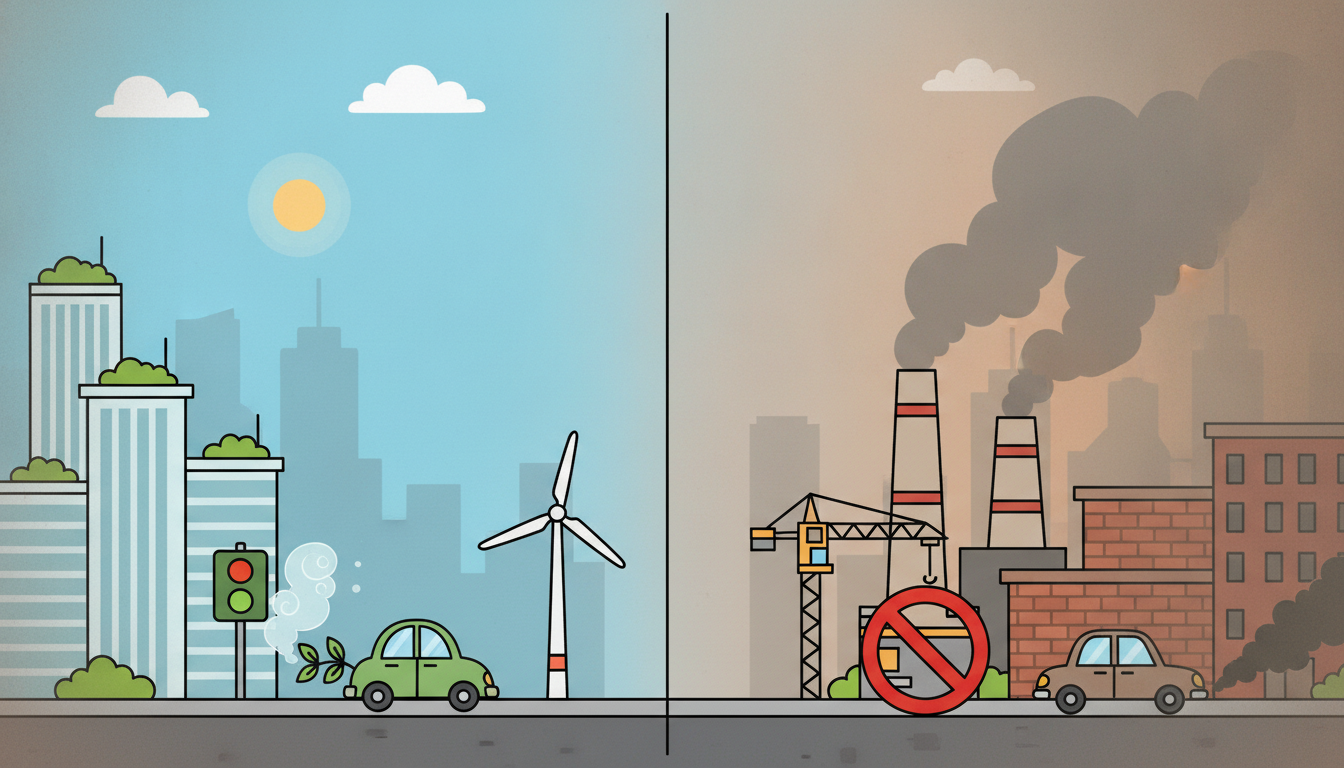
The Delhi government, led by Chief Minister Rekha Gupta, announced a new plan on October 20, 2026, to control air pollution during the upcoming winter. This plan will start on November 1, 2026, and aims to improve air quality before it gets very bad.
One important part of the plan is to control vehicles. From November 1, 2026, petrol and diesel vehicles registered outside Delhi that do not meet certain clean air standards (BS-VI emission standards) will not be allowed to enter the city. However, vehicles that run on CNG (Compressed Natural Gas) or are electric will still be allowed. Also, fuel stations in Delhi and nearby areas will not sell fuel to vehicles that do not have a valid Pollution Under Control (PUC) certificate. This "No PUC, No Fuel" rule was first ordered by the Commission for Air Quality Management (CAQM) in May 2026.
To reduce dust, the plan includes a ban on demolition activities that create dust and outdoor civil construction work from November 1 to January 31. A wider ban on all construction and demolition activities will be in place from December 10 to January 20. The government also wants to reduce the number of cars on the road by asking 50% of employees in government and private offices to work from home, or work from home for two days a week, starting November 1.
Many different groups will work together to make sure this plan is followed. These include the central government, the Delhi government, the CAQM, the Central Pollution Control Board (CPCB), local groups, Delhi Police, and the Delhi Metro Rail Corporation (DMRC).
Knowledge Vault
Air Quality Management
Air quality management involves planning and carrying out actions to protect and improve the quality of the air we breathe. This includes setting rules for pollution, monitoring air, and finding ways to reduce harmful substances in the air. Organizations like the Commission for Air Quality Management (CAQM) work on these tasks.
Pollution Under Control (PUC) Certificate
A Pollution Under Control (PUC) certificate is a document that shows a vehicle's emissions are within acceptable limits set by the government. Vehicles need to pass a test to get this certificate, which helps ensure they are not polluting the air too much. It's a way to check if vehicles are running cleanly.
BS-VI Emission Standards
BS-VI (Bharat Stage VI) emission standards are rules set by the Indian government to control the amount of pollutants released by vehicles. These standards are very strict and aim to make vehicles produce less harmful exhaust. Newer vehicles are designed to meet these standards to help reduce air pollution.
Check your understanding
- What is the main goal of the Delhi government's winter action plan?
- To build new roads in Delhi.
- To proactively address air pollution before it gets worse.
- To encourage more people to buy petrol vehicles.
- To increase construction activities in the city.
- Which type of vehicles will be prohibited from entering Delhi if they are registered outside the city and do not meet BS-VI emission standards?
- Electric vehicles
- CNG vehicles
- Petrol and diesel vehicles
- All vehicles regardless of fuel type
- What is the 'No PUC, No Fuel' rule?
- A rule that allows fuel stations to sell fuel only to new vehicles.
- A rule that requires all vehicles to have a special permit to buy fuel.
- A rule that prevents fuel stations from dispensing fuel to vehicles without a valid Pollution Under Control (PUC) certificate.
- A rule that bans all fuel sales during winter.