Understanding Strokes: What Happens When Blood Flow to the Brain is Interrupted?
A stroke, sometimes called a "brain attack," happens when blood flow to a part of the brain is stopped or a blood vessel bursts. This can cause brain cells to die quickly, leading to serious problems like weakness, trouble speaking, or difficulty walking. Getting medical help very fast is important to try and reduce the damage.
By The Junior Post
Published
Recommended for ages 12+. Editorial guidance, not a guarantee of individual suitability.
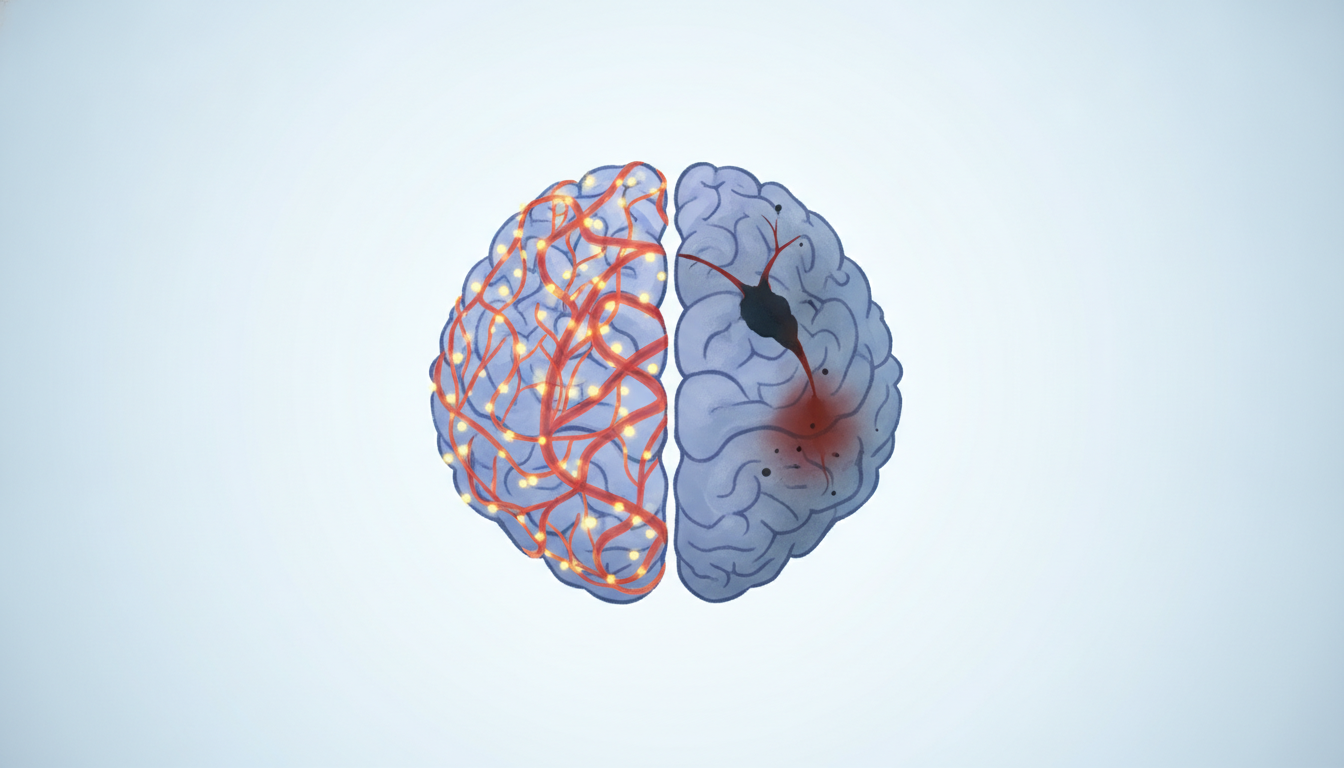
A stroke occurs when the blood supply to the brain is interrupted, or when a blood vessel in the brain bursts. This interruption means that brain cells are starved of oxygen and important nutrients, causing them to die within minutes. This event is sometimes called a "brain attack."
There are two main types of strokes. About 80% of strokes are ischemic strokes, which happen when a blood clot blocks an artery, stopping blood flow to brain tissue. The remaining 20% are hemorrhagic strokes, where a blood vessel ruptures and leaks blood into the brain tissue.
In an ischemic stroke, the most severe damage happens in the central area, called the "core," where brain cells die quickly due to a complete lack of oxygen. Around this core is an area called the ischemic penumbra. In this zone, brain cells receive reduced blood flow and can survive for a short time, but they are still at risk.
The effects of a stroke can appear suddenly. Symptoms might include sudden numbness or weakness, often on one side of the body, confusion, trouble speaking, difficulty walking, dizziness, or a severe headache. The first few hours after a stroke are very important for determining how much damage might occur.
Prompt medical attention is essential. In some cases of ischemic stroke, special clot-busting medications can help reverse the injury if given within a few hours. While recovery can take a long time, sometimes years, some people may not fully regain all their abilities.
Knowledge Vault
Brain Function
The brain is like the control center of your body. It needs a constant supply of blood, which carries oxygen and nutrients, to work properly. When this supply is interrupted, brain cells cannot function and can start to die, affecting how you think, move, and feel.
Blood Vessels
Blood vessels are tubes that carry blood all around your body, including to your brain. Arteries carry oxygen-rich blood away from the heart, and veins carry blood back to the heart. If these vessels get blocked or burst, it can stop blood from reaching important parts of the body.
Oxygen and Nutrients
Oxygen and nutrients are vital for all living cells, including brain cells. Oxygen helps cells produce energy, and nutrients provide the building blocks and fuel they need. Without them, cells cannot survive or do their jobs.
Check your understanding
- What is the main reason brain cells die during a stroke?
- Too much blood flow to the brain
- Lack of oxygen and nutrients
- An increase in brain temperature
- Too much sugar in the blood
- What is the difference between an ischemic stroke and a hemorrhagic stroke?
- Ischemic strokes involve bleeding, while hemorrhagic strokes involve clots.
- Ischemic strokes are caused by a blocked blood vessel, while hemorrhagic strokes are caused by a ruptured blood vessel.
- Ischemic strokes only affect the left side of the brain, while hemorrhagic strokes affect the right side.
- Hemorrhagic strokes are less serious than ischemic strokes.
- Why is it important to get medical help quickly after a stroke?
- To make the symptoms disappear immediately.
- To prevent the stroke from happening again.
- To minimize permanent injury and disability by restoring blood flow or stopping bleeding.
- To allow the brain to heal on its own without intervention.