
Black Friday: From City Chaos to Online Deals, How a Shopping Day Changed
Black Friday, the big shopping day after Thanksgiving, has changed a lot! Once known for huge crowds and midnight queues at stores, it's now a mix of online deals and sales that last for weeks. Learn about its surprising history, why some shops choose not to join, and how it became a global event.
By The Junior Post
Published
Recommended for ages 10+. Editorial guidance, not a guarantee of individual suitability.
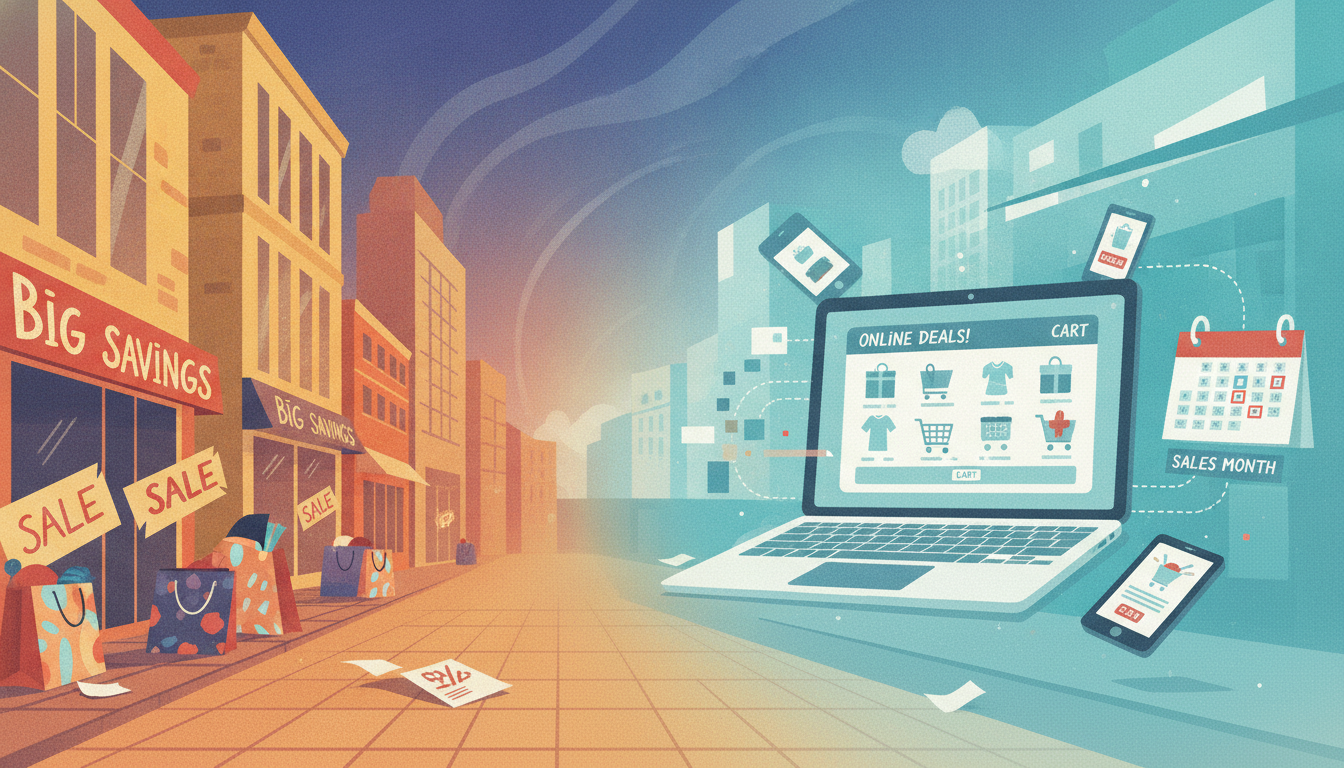
Every year, after Thanksgiving in the United States, a huge shopping event called Black Friday takes place. It's known for big sales and discounts, marking the start of the holiday shopping season. While it used to be famous for massive crowds rushing into stores at midnight, this tradition has changed quite a bit, especially with the rise of online shopping and new habits formed during the COVID-19 pandemic.
The name 'Black Friday' has a surprising history. It wasn't always about shopping! One of its earliest uses was for a gold market crash in September 1869. The connection to shopping after Thanksgiving is often traced back to Philadelphia in the mid-20th century. Police officers and city workers there used the term to describe the huge traffic jams and crowds that gathered for seasonal sales and the annual Army-Navy football game. Bus and taxi drivers also called it 'Black Friday' because of the headaches the crowds caused them.
Later, in the 1980s, some national retailers started saying that Black Friday was the day their businesses finally went 'in the black,' meaning they started making a profit for the year. However, experts suggest this explanation should be taken with a grain of salt, as many companies make profits at different times.
In recent decades, Black Friday became famous for shoppers camping out overnight and rushing into stores for 'doorbuster' deals. But with the internet, people can now make most of their holiday purchases without leaving home. In 2003, online sales made up only a tiny part of total retail sales, but by last year, that number had grown significantly. Also, many big items like televisions are much cheaper now than they were years ago, so there's less need to wait in long lines for a bargain.
Today, Black Friday sales often start weeks before the actual day, sometimes even before Halloween! This extended period is sometimes called 'Black Friday month' or 'Black Friday week.' Retailers do this to get a head start on competitors and to help manage shipping, spreading out all the orders. Even with online shopping being so popular, many people still enjoy going to stores on Black Friday. It's a social event for some, a way to connect with others and experience the holiday buzz.
Beyond Black Friday, other shopping events have grown, like Small Business Saturday and Cyber Monday. Cyber Monday, which was created in 2005, focuses on online deals and has become incredibly popular. In 2023, shoppers in the U.S. spent a record $12.4 billion online on Cyber Monday, and $9.8 billion online on Black Friday itself.
Interestingly, not all stores participate in Black Friday. Some, like the outdoor cooperative REI, choose to close their doors and give their employees paid leave. Other brands, such as Everlane and Ikea, have created their own special campaigns, like donating to causes or encouraging customers to sell back old furniture. These companies often make these choices based on their values, brand image, or business strategy, preferring not to encourage what they see as unnecessary consumption or to devalue their brand with deep discounts. For them, it's about building long-term loyalty rather than attracting one-time bargain hunters.
Knowledge Vault
Evolution of Consumer Habits
Consumer habits are the ways people typically buy and use goods and services. These habits can change over time due to new technologies, major events, or shifts in how businesses operate. For example, Black Friday shows how online shopping and events like the COVID-19 pandemic changed how and when people shop, moving from crowded physical stores to more online and extended sales periods.
Quick check
Three questions
Check your understanding with three questions about this story.
Practice for fun. Ask a parent to create a free family account to save your scores and badges.
What was one of the original reasons the term 'Black Friday' was used in Philadelphia?
- To describe heavy traffic and crowds for sales and a football game.
- To mark the day when stores started selling black-colored items.
- To refer to a historical gold market crash in the city.
- To celebrate the end of the harvest season with special deals.
How has Black Friday shopping changed significantly in recent years?
- It now only happens in physical stores, with no online sales.
- Sales events are shorter, lasting only a few hours on Friday.
- Online shopping has become much more popular, and sales often start weeks earlier.
- Most stores now close on Black Friday to give employees a holiday.
Why do some retailers choose not to participate in Black Friday sales?
- They are not allowed to offer discounts by law.
- They want to maintain their brand image and values, or it doesn't fit their business strategy.
- They only sell products that are not popular during the holiday season.
- They prefer to have sales only on Cyber Monday.
Choose your answers and check your score in the interactive quiz when it finishes loading.