
November's Beaver Moon Shines as a Supermoon This Week
Look up this week to see November's full moon, known as the Beaver Moon, appear larger and brighter than usual. This 'supermoon' happens when the moon is closest to Earth in its orbit, offering a spectacular sight for skygazers from November 23 to 25, 2026.
By The Junior Post
Published
Recommended for ages 10+. Editorial guidance, not a guarantee of individual suitability.
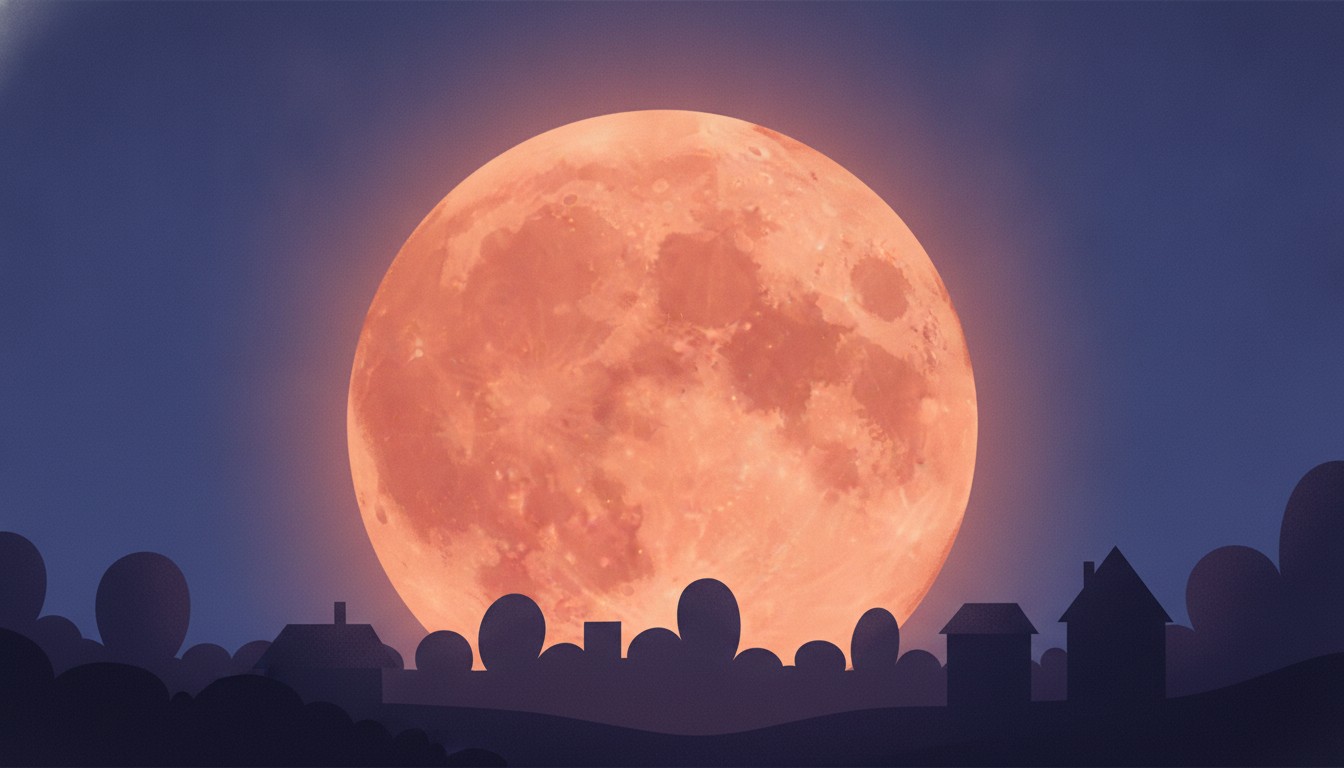
Get ready to look up at the night sky this week, as November's full moon, famously known as the Beaver Moon, will appear as a spectacular 'supermoon'. This celestial event will be visible from Monday, November 23, to Wednesday, November 25, 2026, offering a brilliant show for everyone.
A supermoon occurs when a full moon happens at the same time the Moon is at its closest point to Earth in its orbit. The Moon's path around our planet isn't a perfect circle; it's more like an oval. The closest point in this oval path is called the perigee, and when a full moon shines at this time, it looks bigger and brighter than a regular full moon.
Compared to a 'micromoon' (a full moon when it's furthest away), a supermoon can appear about 14% larger and up to 30% brighter. While this difference might not seem huge to everyone, famous astronomer Neil deGrasse Tyson once compared it to the difference between a 16-inch pizza and a 15-inch pizza, suggesting it's a noticeable but not massive change.
One fascinating thing about seeing the moon, especially a supermoon, is the 'moon illusion'. When the moon is low in the sky, near the horizon, it often looks much larger than when it's high overhead. Scientists believe this is an optical illusion, meaning your eyes are playing a trick on you. One idea is that our brains compare the moon to nearby objects like trees and buildings, making it seem bigger. Another thought is that the light from the low moon travels through more of Earth's atmosphere, scattering blue light and making the moon appear redder or yellower, which our eyes might mistake for increased size.
The full moon in November is traditionally called the 'Beaver Moon'. This name comes from a time when people observed beavers building their winter lodges and preparing for the cold season. Other names for this November moon include the 'digging moon', for animals searching for food, and the 'deer rutting moon', marking the season when deer look for mates. No matter what you call it, it's a wonderful opportunity to enjoy the beauty of our night sky.
This Beaver Moon is just the first in a series of three supermoons. The next two are expected to peak on Christmas Eve and then again on January 22, so keep an eye out for more lunar displays!
Knowledge Vault
Lunar Orbit and Phases
The Moon travels in an oval-shaped path, called an orbit, around the Earth. As it orbits, different amounts of its surface are lit by the Sun, creating what we see as moon phases. A 'full moon' occurs when the Earth is between the Sun and the Moon, making the entire side of the Moon facing us appear bright. Because the orbit is oval, the Moon's distance from Earth changes, leading to phenomena like supermoons when it's closest (perigee) and micromoons when it's farthest (apogee).
Quick check
Three questions
Check your understanding with three questions about this story.
Practice for fun. Ask a parent to create a free family account to save your scores and badges.
What makes a full moon a 'supermoon'?
- It occurs when the moon is at its closest point to Earth in its orbit.
- It is always visible during the day.
- It is a new moon that appears unusually bright.
- It is a full moon that is exactly 30% brighter than any other full moon.
What is the 'moon illusion'?
- The moon actually changes size when it's near the horizon.
- The moon appears much larger when it's close to the horizon, even though its actual size hasn't changed.
- The moon changes color depending on the time of day.
- The moon disappears completely when it's low in the sky.
Why is November's full moon often called the 'Beaver Moon'?
- Because beavers are known to howl at this moon.
- It marks the season when beavers build their winter lodges and prepare for cold weather.
- It is named after a famous astronomer who studied beavers.
- The moon's surface resembles a beaver's fur.
Choose your answers and check your score in the interactive quiz when it finishes loading.