
Telangana to Adopt 10+2 Education System, Replacing Intermediate Colleges
Telangana Chief Minister Revanth Reddy announced on November 11, 2026, that the state will adopt the 10+2 education system starting from the 2027-28 academic year. This change will integrate Classes 11 and 12 into the broader school education framework, moving away from the current system where junior colleges provide Intermediate education.
By The Junior Post
Published
Recommended for ages 10+. Editorial guidance, not a guarantee of individual suitability.
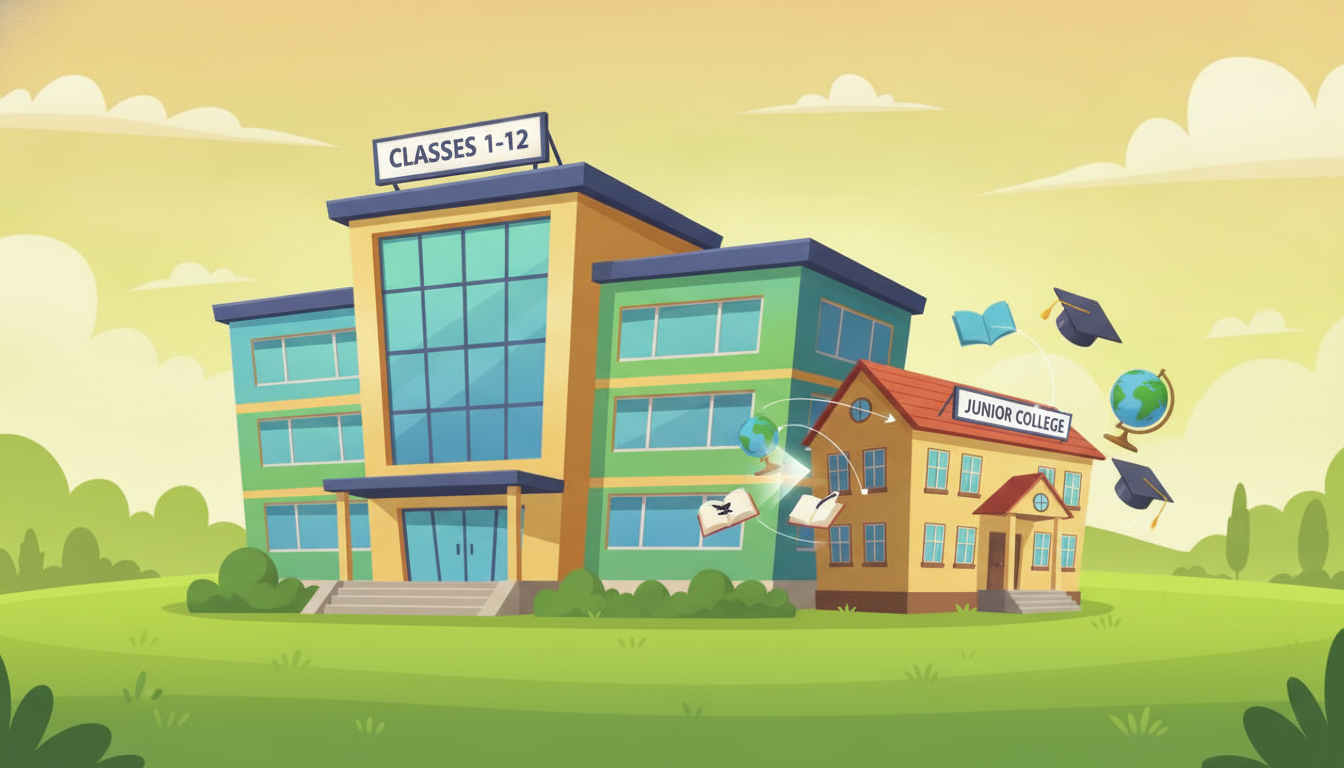
On November 11, 2026, Telangana Chief Minister Revanth Reddy announced a significant change to the state's education system. Starting from the 2027-28 academic year, Telangana will adopt the 10+2 education model. This means that Classes 11 and 12, currently known as Intermediate education and taught in junior colleges, will become part of the regular school system.
Under the current system, students finish Class 10 and then go to junior colleges for Classes 11 and 12, which are managed by the Board of Intermediate Education. The new 10+2 model will bring these classes under the senior secondary education system, similar to how CBSE and ICSE schools operate.
Chief Minister Reddy, who also holds the Education portfolio, explained that these reforms are necessary to meet modern educational needs and improve the quality of education from nursery to university level. He expressed concern about high dropout rates after Class 10, especially among girls and students from Dalit, tribal, and minority communities. He noted that schools following the 10+2 system, like Kendriya Vidyalayas and Navodaya Vidyalayas, have lower dropout rates.
The proposed system will divide school education into three stages: primary education (nursery to Class 4), secondary education (Classes 5 to 8), and senior secondary education (Classes 9 to 12). A special focus will be placed on Classes 9 to 12 as a distinct phase of higher learning, offering specialized education.
The government plans to upgrade government schools to match private institutions, ensuring that students from economically weaker backgrounds have access to quality learning facilities. This will require strengthening school infrastructure, providing qualified teachers, and improving academic facilities. Officials have been asked to assess these needs for a smooth transition.
Keshava Rao, the government adviser for public affairs and chairman of the committee on educational reforms, confirmed that Intermediate education would move under the senior secondary education system. Chief Minister Reddy also assured that the employment and retirement benefits of lecturers and non-teaching staff in government junior colleges would not be affected by these changes.
Knowledge Vault
10+2 Education System
The 10+2 education system is a common structure in India where students complete 10 years of schooling (up to Class 10) and then two additional years of senior secondary education (Classes 11 and 12) within the same school framework. This system prepares students for higher education at universities or colleges.
Senior Secondary Education
Senior secondary education refers to the final stage of school education, typically covering Classes 11 and 12. It often involves more specialized subjects and prepares students for entrance into universities or vocational training programs.
Government Reforms
Government reforms are changes made by the government to improve or update a system, law, or policy. In this story, the Telangana government is making reforms to its education system to improve quality and access for students.
Check your understanding
- What is the main change Telangana is making to its education system?
- Introducing new subjects only for primary school students.
- Replacing all private schools with government-run institutions.
- Integrating Classes 11 and 12 into the regular school system.
- Making university education mandatory for all students after Class 10.
- According to Chief Minister Revanth Reddy, what is one reason for changing the education system?
- To reduce the number of teachers in schools.
- To increase the cost of education for all families.
- To address high dropout rates after Class 10, especially among certain communities.
- To make all schools follow the same curriculum as international schools.
- What will happen to the employment and retirement benefits of staff in government junior colleges after the change?
- Their employment will be terminated immediately.
- Their benefits will be significantly reduced.
- Their employment and retirement benefits will not be affected.
- They will be transferred to private schools without benefits.