
Unlucky Friday the 13th: Tracing the Roots of a Widespread Superstition
Friday the 13th is widely considered a day of bad luck, with its origins linked to ancient myths and historical events. Many people avoid important activities on this date, and some reports suggest it can even affect things like property sales.
By The Junior Post
Published
Recommended for ages 10+. Editorial guidance, not a guarantee of individual suitability.
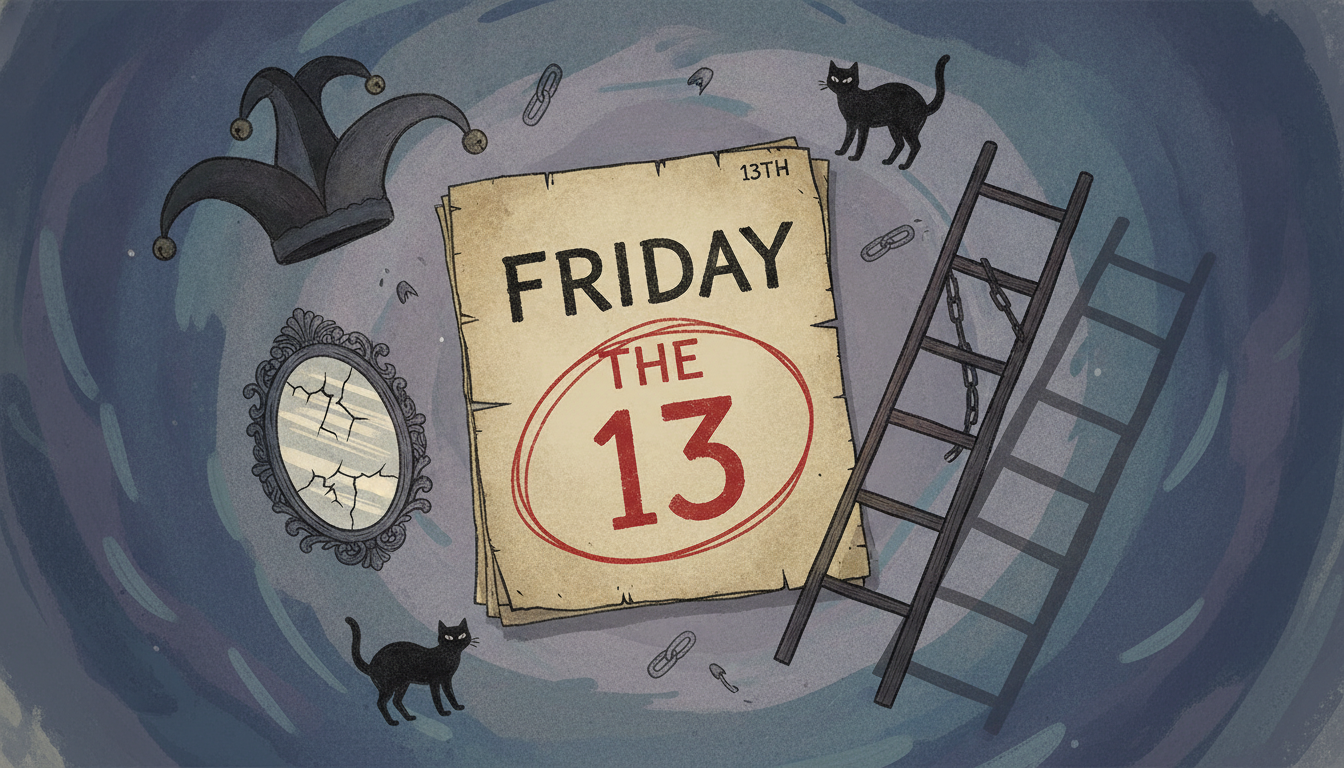
The idea that Friday the 13th is unlucky has roots in various traditions. In Norse mythology, the number 13 is linked to the story of Loki, a trickster god. He was said to be the 13th guest at a banquet, and his presence led to the death of Balder, the god of light and goodness.
In Christianity, the belief is often connected to the Last Supper, where Judas, who betrayed Jesus, was the 13th person at the table. Jesus's crucifixion is also believed to have happened on a Friday. These stories helped create the idea that both the number 13 and Fridays can be unlucky.
Another historical event often mentioned is the arrest of hundreds of Knights Templar for heresy on Friday, October 13, 1307. These events, among others, have contributed to the widespread belief.
The superstition became particularly well-known in 19th-century France. In America, evidence of Friday the 13th being considered unlucky dates back to the late 19th century. For example, William Fowler founded the 'Thirteen Club' in 1882 to challenge these taboos. Its 13 members would meet for a 13-course meal on the 13th day of each month in room 13 of the Knickerbocker Cottage in New York City.
Today, many people avoid scheduling important events like weddings, flights, job interviews, or even surgeries on Friday the 13th. Some reports even suggest that properties sold on Friday the 13th in 2026 had a median price that was 5.2% lower than the wider annual median.
Knowledge Vault
Superstition
A superstition is a belief or practice that is not based on reason or scientific knowledge, but rather on tradition, magic, or fear of the unknown. People might believe that certain actions, objects, or dates bring good or bad luck, even without clear evidence.
Norse Mythology
Norse mythology is a collection of stories and beliefs from the Germanic peoples of Scandinavia, including tales about gods like Odin, Thor, and Loki, and events that explain the world and its origins. These myths often feature powerful beings and magical elements.
Knights Templar
The Knights Templar were a powerful Christian military order during the Middle Ages. They were known for their role in the Crusades and for protecting pilgrims. They were later arrested on charges of heresy, an event sometimes linked to the Friday the 13th superstition.
Quick check
Three questions
Check your understanding with three questions about this story.
Practice for fun. Ask a parent to create a free family account to save your scores and badges.
Which of these is NOT mentioned as a possible origin for the superstition of Friday the 13th?
- The story of Loki in Norse mythology.
- The Last Supper and Jesus's crucifixion.
- The founding of the 'Thirteen Club' by William Fowler.
- The arrest of the Knights Templar.
According to the article, what is one way the belief in Friday the 13th's bad luck might affect real-world events?
- It causes more people to get married on that day.
- It leads to an increase in job interviews.
- Properties sold on Friday the 13th might have lower median prices.
- It encourages more people to take flights.
What was the main purpose of William Fowler's 'Thirteen Club'?
- To celebrate the number 13 as lucky.
- To prove that Friday the 13th was truly unlucky.
- To challenge and disprove superstitious taboos.
- To promote the sale of properties on Friday the 13th.
Choose your answers and check your score in the interactive quiz when it finishes loading.