
Blast Off! Muhammad Zeeshan Ali, Pakistan’s First Astronaut, Zooms into Space
Muhammad Zeeshan Ali has made history as the first Pakistani astronaut to journey into orbit, joining China's Tiangong space station aboard the Shenzhou-24 spacecraft. This mission marks a big step for international cooperation in space, as Ali becomes the first foreign national to visit China's orbital outpost.
By The Junior Post
Published
Recommended for ages 10+. Editorial guidance, not a guarantee of individual suitability.
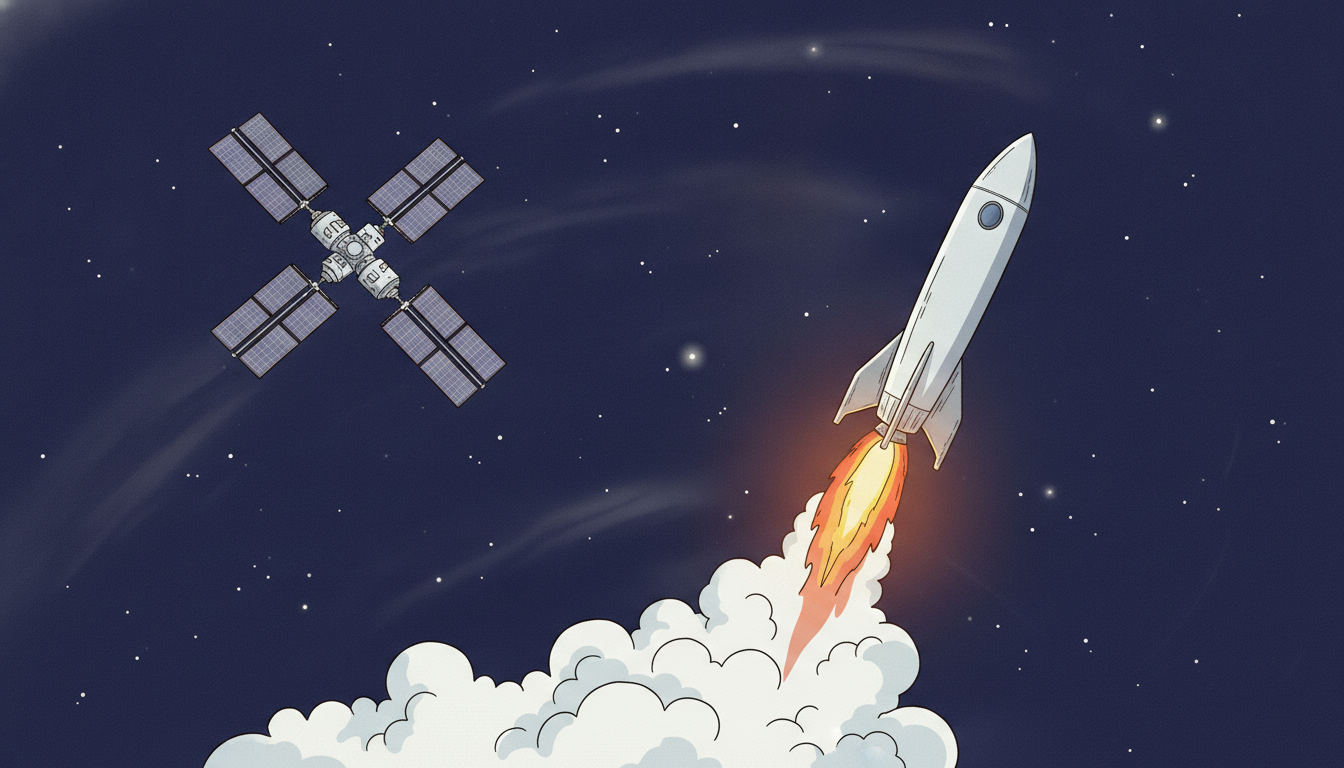
A new chapter in space exploration has begun as Muhammad Zeeshan Ali, a pilot from Pakistan, successfully launched into space aboard China's Shenzhou-24 mission. This historic journey makes him the first Pakistani astronaut to reach orbit and the first foreign national to visit China's Tiangong space station.
The Shenzhou-24 spacecraft, carrying a three-person crew, lifted off on Wednesday morning, November 25, 2026, at 8:18 a.m. Beijing time. It was propelled into space by a powerful Long March-2F rocket from the Jiuquan Satellite Launch Centre in northwest China. The mission's main goal is to deliver astronauts to the Tiangong space station, which China completed assembling in low Earth orbit in late 2022.
Muhammad Zeeshan Ali, who is 40 years old, will serve as a payload specialist during his time on the space station. He is expected to stay for about one week, focusing on scientific experiments that are part of the cooperation between China and Pakistan. He will also take part in the station's daily activities.
Ali prepared for this incredible journey with seven months of intense training in Beijing. This included learning Chinese language, songs, and poetry, as well as practicing calligraphy and playing table tennis. Before his flight, Ali shared his feelings with reporters, saying, 'I'm not flying for myself. I carry the name of Pakistan on my shoulder,' showing his pride in representing his country.
The Shenzhou-24 mission also includes Chinese commander Tang Hongbo and flight engineer Wu Yi. Tang Hongbo is making his third visit to Tiangong, a record for any astronaut. While Chinese astronauts typically stay for about six months, Ali's shorter visit is part of a crew rotation plan, allowing him to return to Earth with members of the previous Shenzhou-23 mission.
This mission is a significant step for China's space program, which is actively promoting Tiangong as a hub for international cooperation. With the International Space Station (ISS) possibly retiring by 2030, China's efforts to open its station to foreign astronauts highlight a growing trend towards global collaboration in space, as nations look towards future goals like sending humans to the Moon by 2030.
Knowledge Vault
International Cooperation in Space
International cooperation in space means that different countries work together on space missions, projects, and research. This can involve sharing resources, knowledge, and even astronauts. For example, China opening its Tiangong space station to foreign astronauts like Muhammad Zeeshan Ali shows how nations can collaborate to explore space, conduct scientific experiments, and achieve goals that might be too difficult or expensive for one country to do alone. This teamwork helps advance our understanding of space for everyone.
Quick check
Three questions
Check your understanding with three questions about this story.
Practice for fun. Ask a parent to create a free family account to save your scores and badges.
What makes Muhammad Zeeshan Ali's space journey historic?
- He is the first Pakistani astronaut to reach orbit and the first foreign national to visit China's Tiangong space station.
- He is the youngest astronaut to ever visit the Tiangong space station.
- He built the Tiangong space station himself.
- He was the first person to fly a Long March-2F rocket.
Where did the Shenzhou-24 spacecraft launch from?
- A launchpad in Beijing
- The Jiuquan Satellite Launch Centre in northwest China
- A spaceport near the Great Wall
- The International Space Station
What is one of China's future goals in space exploration, as mentioned in the article?
- To build a new space station on Mars.
- To send astronauts to the Moon by 2030.
- To develop faster-than-light travel.
- To create a space hotel for tourists.
Choose your answers and check your score in the interactive quiz when it finishes loading.