
England's Hottest Summer on Record in 2026 Linked to Over 5,200 Deaths
England experienced its hottest summer on record in 2026, leading to a provisional total of 5,258 deaths linked to extreme heat. This figure, reported by the UK Health Security Agency, is the highest in a decade, far surpassing previous records. Experts warn that climate change is making heatwaves longer and more intense, highlighting the urgent need for better preparation.
By The Junior Post
Published
Recommended for ages 10+. Editorial guidance, not a guarantee of individual suitability.
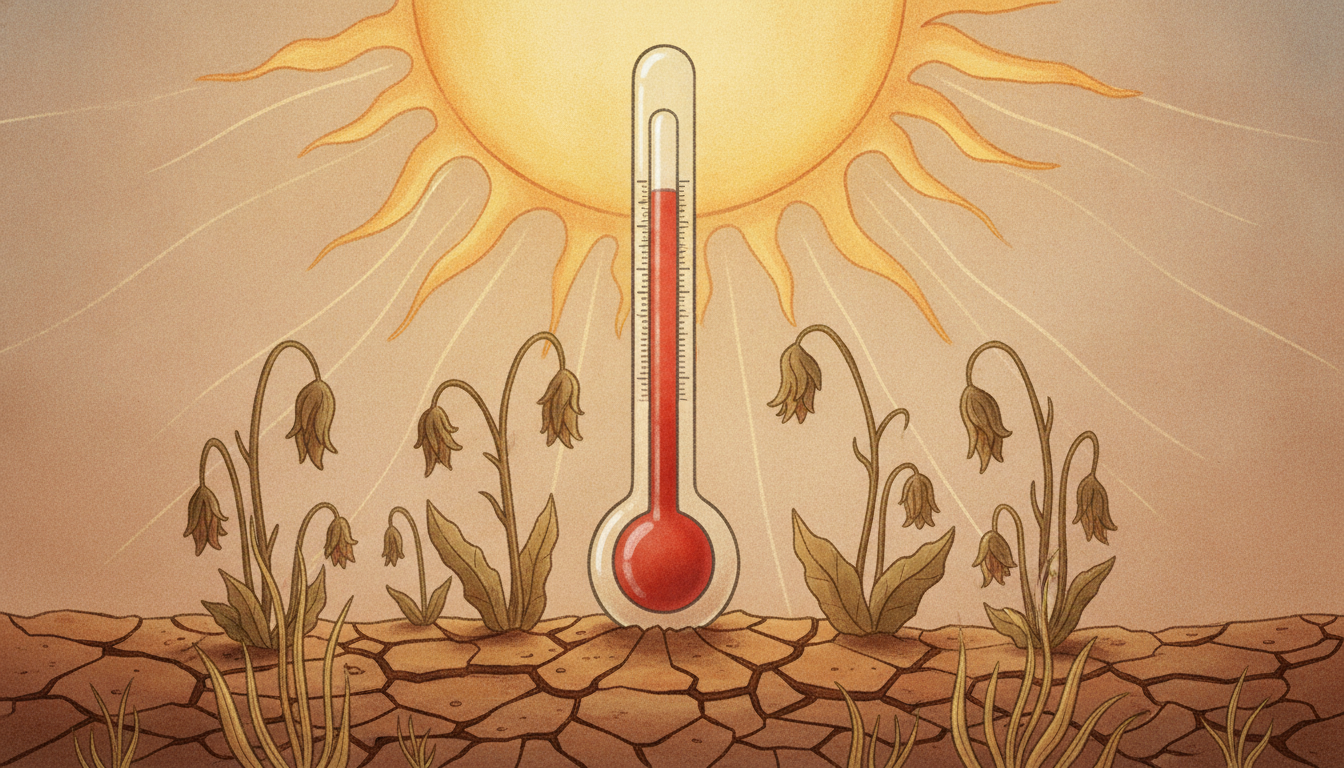
England experienced its hottest summer ever in 2026, with temperatures soaring and very little rain. This extreme heat had a serious impact, as a provisional report from the UK Health Security Agency (UKHSA) revealed that 5,258 deaths were linked to the summer heat between May and September.
This number marks the highest annual total since records began ten years ago in 2016. It is much higher than the previous record of 2,985 deaths, which was recorded in 2022. The summer of 2026 saw temperatures reach 38 degrees Celsius in Norfolk in June and 38.2 degrees Celsius in Gloucestershire in August. July was also the driest on record for England, with only 7mm of rain.
The UKHSA noted that the summer included seven 'heat episodes', which are periods of very hot weather, lasting a total of 41 days. This was the highest number of such episodes and days since monitoring started. The most severe period was a heatwave between June 21 and 28, during which an estimated 2,401 people died. More than 3,000 heat-related deaths occurred during the first two heat episodes in May and June.
Dr. Ross Thompson, a principal environmental health scientist at UKHSA, explained that climate change is already affecting people's health in England. He warned that extreme heat periods are expected to become longer, more frequent, and more intense in the future. He stressed the importance of individuals, communities, and health services being prepared for these changes.
The UKHSA also highlighted that heat early in the summer can be especially dangerous because people and public services might not be ready for it yet. They suggested that measures to protect against heat should be in place from the very beginning of summer, not just during the hottest weeks. These figures are still provisional because all death registration data for the period has not yet been fully collected.
Across Europe, an early summer heatwave also caused concern, with the World Health Organization (WHO) linking over 1,300 excess deaths to high temperatures. WHO chief Tedros Adhanom Ghebreyesus called heat stress a 'silent killer' and noted that many European buildings are not designed for such extreme heat. He urged European countries to create 'heat health action plans' to protect people.
Knowledge Vault
Impact of Extreme Heat
Extreme heat, often occurring during heatwaves, can be very dangerous for human health. When the body gets too hot, it struggles to cool down, which can lead to serious health problems like heatstroke or make existing conditions worse. This is especially risky for older people or those with certain health issues. Preparing for hot weather, like staying hydrated and seeking cool places, is important to stay safe.
Quick check
Three questions
Check your understanding with three questions about this story.
Practice for fun. Ask a parent to create a free family account to save your scores and badges.
What was the provisional number of deaths linked to summer heat in England in 2026?
- 5,258
- 2,985
- 1,311
- 7mm
According to Dr. Ross Thompson, what can we expect regarding extreme heat periods due to climate change?
- They will become shorter and less frequent.
- They will become longer, more frequent, and more intense.
- They will only affect certain parts of the world.
- They will disappear entirely.
Why did the UKHSA suggest that heat early in the summer can be particularly dangerous?
- Because temperatures are always highest in early summer.
- Because people and public services may not yet be prepared.
- Because there is more rain in early summer.
- Because it affects only very young children.
Choose your answers and check your score in the interactive quiz when it finishes loading.