
Fact Check: Unmasking Viral Hoaxes – Pterodactyls, Jellyfish UFOs, and US Blackout Rumours
From ancient flying reptiles in Mexico to mysterious objects in Alaskan skies and warnings of a nationwide blackout in the US, the internet has been buzzing with viral stories. However, many of these captivating tales are actually hoaxes or fake news. This article dives into these recent viral sensations, separating fact from fiction and explaining why it's important to be careful about what you believe and share online.
By The Junior Post
Published
Recommended for ages 10+. Editorial guidance, not a guarantee of individual suitability.
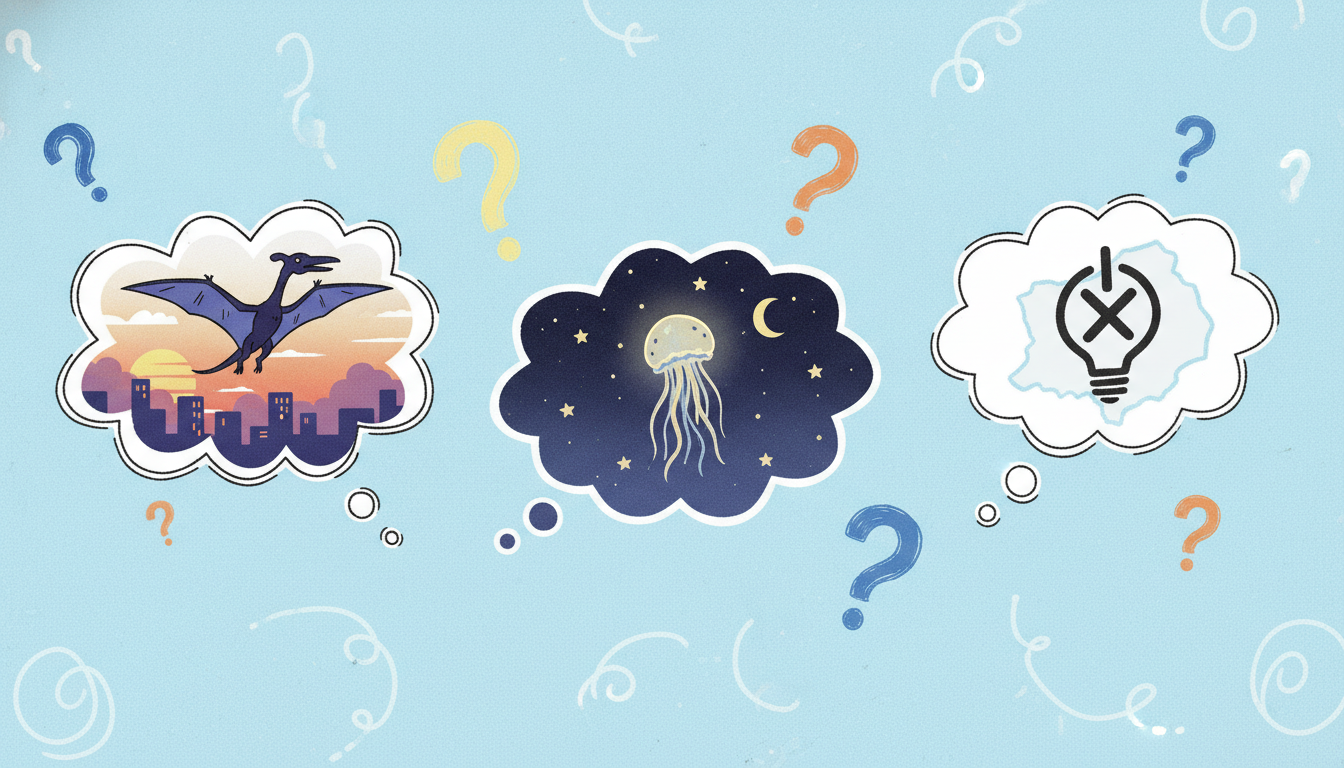
The internet is a fascinating place, but it's also a place where stories that aren't true can spread like wildfire. Recently, three big stories have captured attention: claims of a pterodactyl flying over Mexico, a strange 'jellyfish UFO' in Alaska, and warnings of a massive blackout across the United States. Let's take a closer look at why these stories are not what they seem.
First, the 'Pterodactyl in Mexico' videos. Social media was filled with clips showing a winged creature flying over Ciudad Juárez. While exciting, experts and local authorities have dismissed these claims. Palaeontologists confirm that pterosaurs, the group of flying reptiles that included pterodactyls, died out about 66 million years ago. The viral footage has been described as digital entertainment, possibly showing large birds, AI-generated visuals, or even toy drones.
Next, the 'Jellyfish UFO' in Alaska. Footage captured in June 2026, and later going viral in November 2026, showed a bell-shaped object with tentacle-like extensions hovering near a military base in Anchorage. While the video itself appears to be genuine camera footage, its exact identity remains unconfirmed. Credible analysts suggest it could be a misidentified kite or balloon, and there's no official statement from aviation or military agencies confirming it as an unexplained aerial phenomenon. Some analyses even suggest that anomalies in infrared cameras or simple optical illusions could create such an appearance.
Finally, the 'Blackout in US' hoax. Rumours spread rapidly online, especially on platforms like TikTok and X, claiming a 90-day nationwide power outage, internet shutdown, and banking disruption would begin on November 17, 2026. This panic was linked to a scheduled, routine one-minute nationwide Emergency Alert System test by FEMA (Federal Emergency Management Agency) and the FCC (Federal Communications Commission). Fact-checkers and federal agencies have confirmed that there was no evidence to support a widespread blackout. The hoax also used manipulated videos of public figures and out-of-context references from TV shows like 'The Simpsons' to make the claims seem real.
Fake news and hoaxes can have several negative effects. For children, exposure to false information can cause anxiety, affect self-esteem, and create a distorted view of the world. It can also make it harder to trust reliable sources of information, like reputable news organisations and scientists. In some cases, misinformation has even been linked to real-world harm, such as inciting violence or discouraging important health actions.
It's important to learn how to spot fake news. Always check the source of the information, look for sensational language or unusual website addresses, and see if other trusted news outlets are reporting the same story. If something seems too good or too bad to be true, it probably is!
Knowledge Vault
Fake News and Misinformation
Fake news refers to false or misleading information presented as factual news, often created to deceive or harm. Misinformation is misleading information that can be shared unintentionally. Both can look real, but their consequences can be far-reaching, affecting people's thoughts and actions.
Critical Thinking in Media
Critical thinking in media means carefully evaluating information, especially online, before believing or sharing it. This involves checking sources, looking for evidence, and considering if the information is trying to make you feel a strong emotion. It's a key skill for understanding the world around you.
Quick check
Three questions
Check your understanding with three questions about this story.
Practice for fun. Ask a parent to create a free family account to save your scores and badges.
Which of these is NOT a reason why the 'Pterodactyl in Mexico' videos are considered fake news?
- Pterosaurs became extinct millions of years ago.
- Local authorities described the footage as digital entertainment.
- The videos were filmed by a famous palaeontologist.
- The mysterious silhouettes could be large birds or AI-generated.
What was the actual event that led to the 'Blackout in US' hoax?
- A nationwide cyberattack.
- A routine Emergency Alert System test.
- A major solar flare.
- A planned government shutdown.
Why is it important for children to be careful about fake news?
- It helps them win online games.
- It can cause anxiety and distrust in reliable sources.
- It allows them to create their own viral content.
- It makes them popular on social media.
Choose your answers and check your score in the interactive quiz when it finishes loading.