
India's Finance Ministry Warns of Possible Rise in Retail Prices
India's Finance Ministry has cautioned that retail inflation might increase in the coming months. This is mainly due to higher demand during the festive and wedding seasons, along with other factors like weather changes and global events. However, falling oil prices and a stronger rupee could help manage the situation.
By The Junior Post
Published
Recommended for ages 10+. Editorial guidance, not a guarantee of individual suitability.
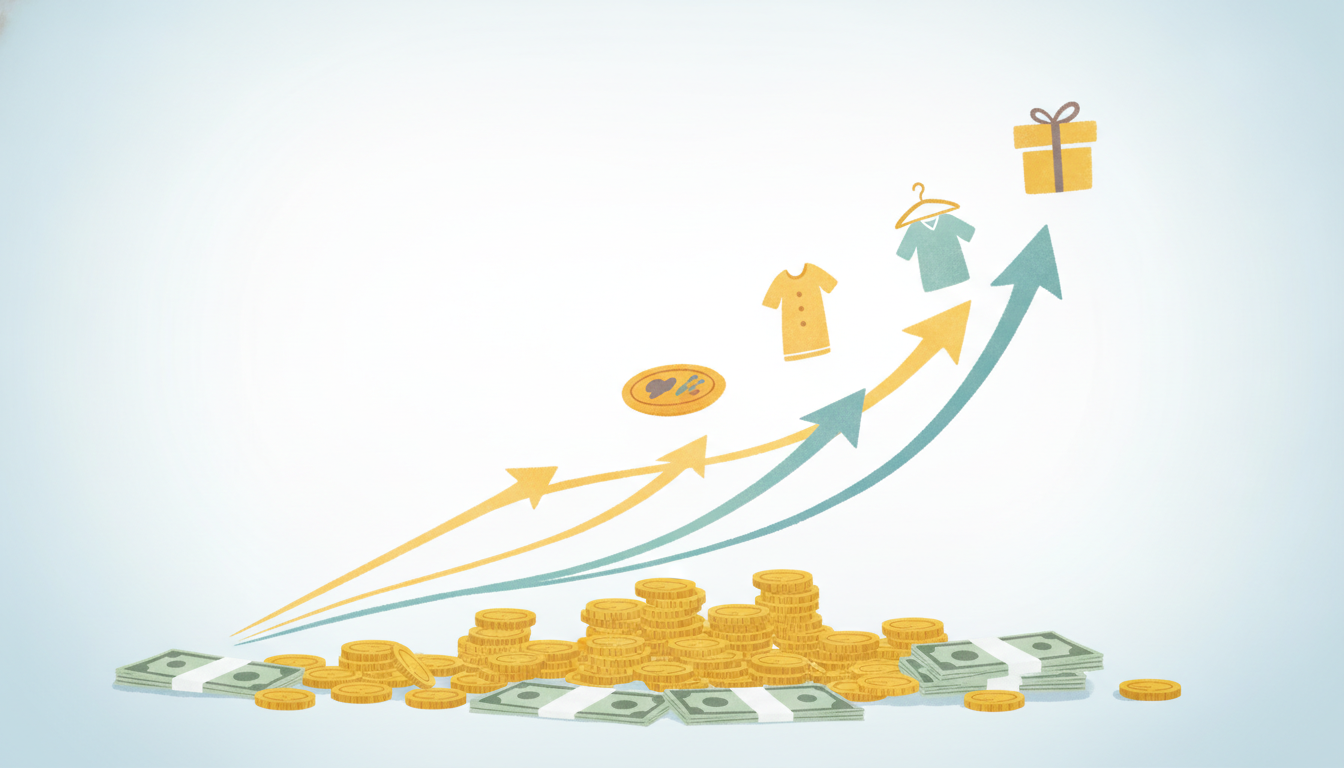
India's Finance Ministry has issued a warning that the prices of goods and services, known as retail inflation, could go up in the next few months. This caution comes from their Monthly Economic Review (MER) for November.
The main reason for this expected rise is the increased demand for both food and non-food items during the ongoing festive season and the upcoming wedding season. When many people want to buy things at the same time, shops might increase their prices.
Other factors could also push prices higher. One is called an 'unfavourable base effect,' which means that if prices were very low last year, even a small increase this year can look like a big jump. Weather changes, including the possibility of a strong El Nino, could also affect how much food is grown, which then impacts food prices.
Global events play a role too. The Ministry noted that ongoing tensions in the Middle East and risks to shipping through the Strait of Hormuz could make the cost of importing oil more expensive. If oil prices go up, it costs more to transport goods, and these extra costs can be passed on to shoppers.
In October, retail inflation reached 6.09%. This was the first time in two years that it went above the Reserve Bank of India's (RBI) upper tolerance limit of 6%. The increase was largely because food prices rose sharply.
However, there's some good news that might help. Recently, global crude oil prices have fallen below $100 per barrel. Also, the Indian rupee has become stronger against other currencies. If these trends continue, they could help keep imported goods from becoming too expensive.
Despite the inflation warning, the Finance Ministry expects India's economy to remain strong. They believe that people will continue to buy things, businesses will invest, and manufacturing will grow, helping the country manage these challenges.
Knowledge Vault
Retail Inflation
Retail inflation measures how much the prices of everyday goods and services that people buy, like food, clothes, and fuel, have increased over a period of time. It is often calculated as a percentage change from the previous year. When retail inflation is high, it means that the same amount of money can buy fewer things than before.
Quick check
Three questions
Check your understanding with three questions about this story.
Practice for fun. Ask a parent to create a free family account to save your scores and badges.
According to the Finance Ministry, what is one main reason retail inflation might increase in the coming months?
- Increased demand during festive and wedding seasons
- A decrease in global crude oil prices
- A stronger Indian rupee
- Lower manufacturing activity
What was India's retail inflation rate in October, and how did it compare to the RBI's limit?
- 5.50%, which was below the RBI's limit
- 6.09%, which breached the RBI's upper limit of 6%
- 6.00%, which was exactly the RBI's limit
- 7.15%, which was much higher than the RBI's limit
Which of these factors could help limit the impact of imported inflation, if sustained?
- Continuing tensions in the Middle East
- A strong El Nino weather pattern
- Lower global crude oil prices and a stronger rupee
- An unfavourable base effect
Choose your answers and check your score in the interactive quiz when it finishes loading.