
Leonid Meteor Shower Peaks Tonight, Offering Fast, Bright Streaks Across the Sky
The annual Leonid meteor shower is set to peak tonight, November 17, into the early hours of November 18, 2026, offering skywatchers a chance to see some of the fastest meteors. While not expected to be a 'meteor storm' this year, observers in dark locations could still spot up to 15 meteors per hour. The shower is caused by Earth passing through debris left by Comet 55P/Tempel-Tuttle.
By The Junior Post
Published
Recommended for ages 10+. Editorial guidance, not a guarantee of individual suitability.
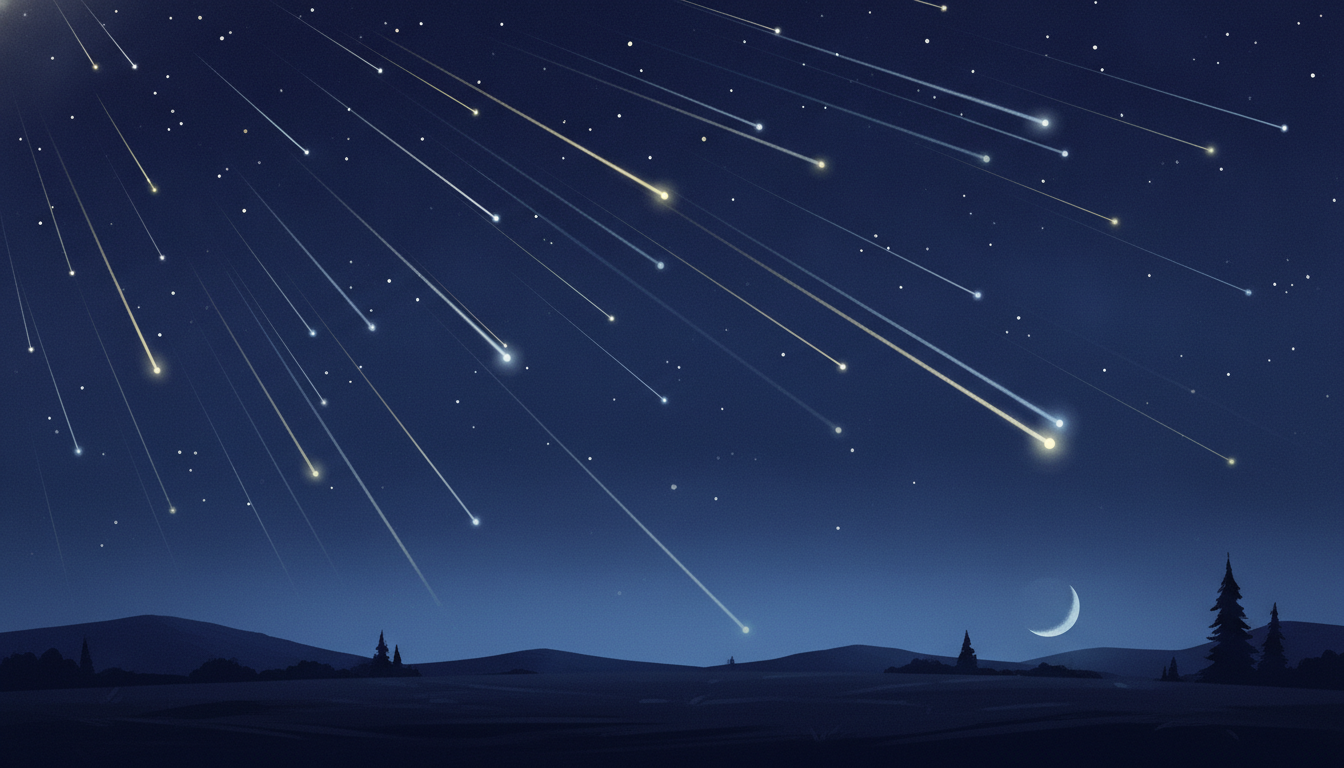
The Leonid meteor shower, known for its swift and bright 'shooting stars,' is expected to reach its peak tonight, November 17, extending into the early hours of November 18, 2026. This annual celestial event offers a chance for stargazers to witness meteors streaking across the night sky.
During its peak, under ideal dark sky conditions, observers might see up to 15 meteors per hour. These meteors are among the fastest visible from Earth, traveling at speeds of about 71 kilometers (44 miles) per second. They can produce bright, colorful streaks and sometimes leave glowing trails that linger for a few seconds.
The Leonid meteor shower occurs each November as Earth passes through a trail of dust and small particles left behind by Comet 55P/Tempel-Tuttle. This comet, which takes approximately 33 years to orbit the Sun, sheds debris that then interacts with our planet's atmosphere. When these tiny particles hit Earth's atmosphere at high speeds, they burn up, creating the flashes of light we call meteors.
While the Leonids are famous for occasionally producing spectacular 'meteor storms' with thousands of meteors per hour, such an event is not anticipated this year. The last major Leonid meteor storm occurred in 2002, and the next one could be as early as 2031.
For the best viewing experience, it is recommended to find a spot away from city lights. The peak viewing time is generally between midnight and dawn. The Moon, which will be about half full, is expected to set around midnight in many locations, providing darker skies for the rest of the night. Meteors will appear to radiate from the constellation Leo, but can be seen across the sky. It's helpful to allow your eyes about 20 minutes to adjust to the darkness.
Knowledge Vault
Meteor Shower
A meteor shower is a celestial event where multiple meteors are observed to originate from one point in the night sky. These showers occur when Earth passes through streams of cosmic debris left by comets or asteroids. As the debris enters Earth's atmosphere, it burns up, creating bright streaks of light.
Comet
A comet is a celestial body made of ice, dust, and rock that orbits the Sun. When a comet approaches the Sun, its ice vaporizes, releasing gas and dust, which forms a glowing coma (atmosphere) and often a tail. This released dust is what causes meteor showers when Earth passes through it.
Light Pollution
Light pollution is the excessive or inappropriate use of artificial outdoor light. It can obscure the night sky, making it difficult to see stars and other celestial objects, including meteor showers, especially in urban areas.
Quick check
Three questions
Check your understanding with three questions about this story.
Practice for fun. Ask a parent to create a free family account to save your scores and badges.
What causes the Leonid meteor shower?
- Dust and debris from an asteroid hitting Earth's atmosphere.
- Earth passing through a trail of particles left by a comet.
- Large pieces of rock falling from the Moon.
- Stars falling out of their constellations.
What is the best time to view the Leonid meteor shower tonight?
- Just after sunset.
- Between midnight and dawn.
- In the middle of the afternoon.
- Right before sunset.
Why is it recommended to find a spot away from city lights to watch a meteor shower?
- City lights make the meteors appear brighter.
- City lights interfere with telescope equipment.
- City lights create light pollution, making fainter meteors harder to see.
- City lights attract more meteors.
Choose your answers and check your score in the interactive quiz when it finishes loading.