
Understanding Patents: What They Are and Why They Matter to Companies like Uber, Tesla, and Meta
Patents are legal protections for new inventions, giving inventors exclusive rights. Learn how companies like Carma use patents to protect their ideas, how Tesla is fighting for fair patent use, and how Meta is exploring patents inspired by Apple's technology.
By The Junior Post
Explainer · First published
Recommended for ages 10+. Editorial guidance, not a guarantee of individual suitability.
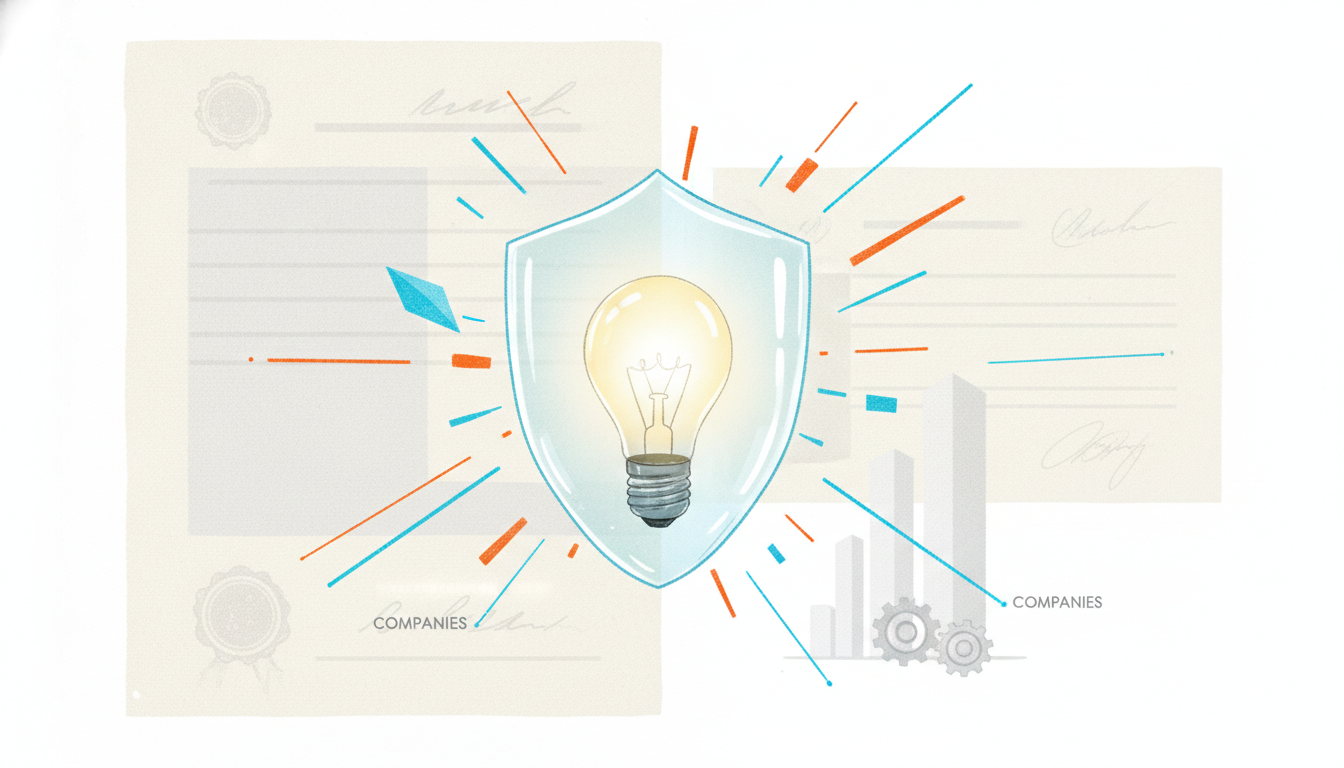
Imagine you invent a super cool new gadget. How do you make sure no one else just copies your idea and sells it as their own? That's where patents come in! A patent is a special legal document that protects new inventions, giving the inventor exclusive rights for a period of time. This means only they can make, use, or sell their invention.
One interesting example is a company called Carma Technology. Back in 2007, its founder, Sean O'Sullivan, came up with an idea for a system that matches people needing a ride with available seats in vehicles, which is now known as ridesharing. Carma filed patents for this system. Years later, in 2016, Carma's lawyers contacted Uber, claiming that Uber was using Carma's patented ridesharing ideas without permission. Carma has since filed a lawsuit, seeking payment and other protections for its inventions. Uber, a much larger company, had its own patent applications rejected between 2016 and 2019 because they were too similar to Carma's existing patents.
Another company, Tesla, is also involved in patent discussions, but in a different way. Tesla, known for its electric cars, wants to use 5G technology in its vehicles in the UK. To do this, Tesla needs a license to use patents held by other companies, including InterDigital, which are managed by a platform called Avanci. Tesla believes these licenses should be offered on 'fair, reasonable, and non-discriminatory' (FRAND) terms. After a legal battle, the UK's Supreme Court ruled in Tesla's favor, saying that patent owners must offer licenses on fair terms, even if they are part of a patent group.
Even tech giants like Meta are looking at patents to inspire new products. Meta, the company behind virtual reality headsets, recently filed a patent that seems to be inspired by a feature from Apple's Vision Pro headset called 'EyeSight'. This feature allows users of the Apple headset to see people around them while also displaying the user's eyes to others, helping them stay connected. Meta's patent describes a similar idea for 'Embedded Sensors in Immersive Reality Headset to enable Social Presence', possibly for a future Quest headset. This shows how companies constantly watch each other's innovations and use patents to protect their own versions of new ideas.
These examples show that patents are a big deal in the world of technology and business. They help inventors protect their hard work, encourage new ideas, and sometimes lead to complex legal battles between companies. Understanding patents helps us appreciate the effort that goes into creating the technologies we use every day.
Knowledge Vault
Intellectual Property Protection
Intellectual property (IP) protection, such as patents, gives creators legal rights to control how their inventions are used. This encourages new ideas by ensuring that inventors can benefit from their original work and helps prevent others from copying it without permission.
Quick check
Three questions
Check your understanding with three questions about this story.
Practice for fun. Ask a parent to create a free family account to save your scores and badges.
What is the main purpose of a patent?
- To give an inventor exclusive rights to their invention
- To allow anyone to freely copy an invention
- To make inventions more expensive
- To prevent companies from creating new products
Why did Carma Technology sue Uber?
- Uber refused to hire Carma's employees.
- Carma alleged Uber infringed on its ridesharing patents.
- Uber copied Carma's business model for selling fish.
- Carma wanted to buy Uber's patents.
What does 'FRAND' terms refer to in the context of Tesla's lawsuit?
- Fast, Reliable, and New Devices
- Fair, Reasonable, and Non-Discriminatory terms for patent licenses
- Free, Random, and Non-Exclusive downloads
- Future, Research, and Advanced Network designs
Choose your answers and check your score in the interactive quiz when it finishes loading.