
Why Countries Can't Print Unlimited Money
Imagine if everyone suddenly had a huge pile of money. What would happen? It might seem like a great idea at first, but countries can't just print unlimited money because it would make everything much more expensive and actually make people poorer. This is because printing too much money without making more goods and services leads to something called inflation, where money loses its value very quickly.
By The Junior Post
Explainer · First published
Recommended for ages 10+. Editorial guidance, not a guarantee of individual suitability.
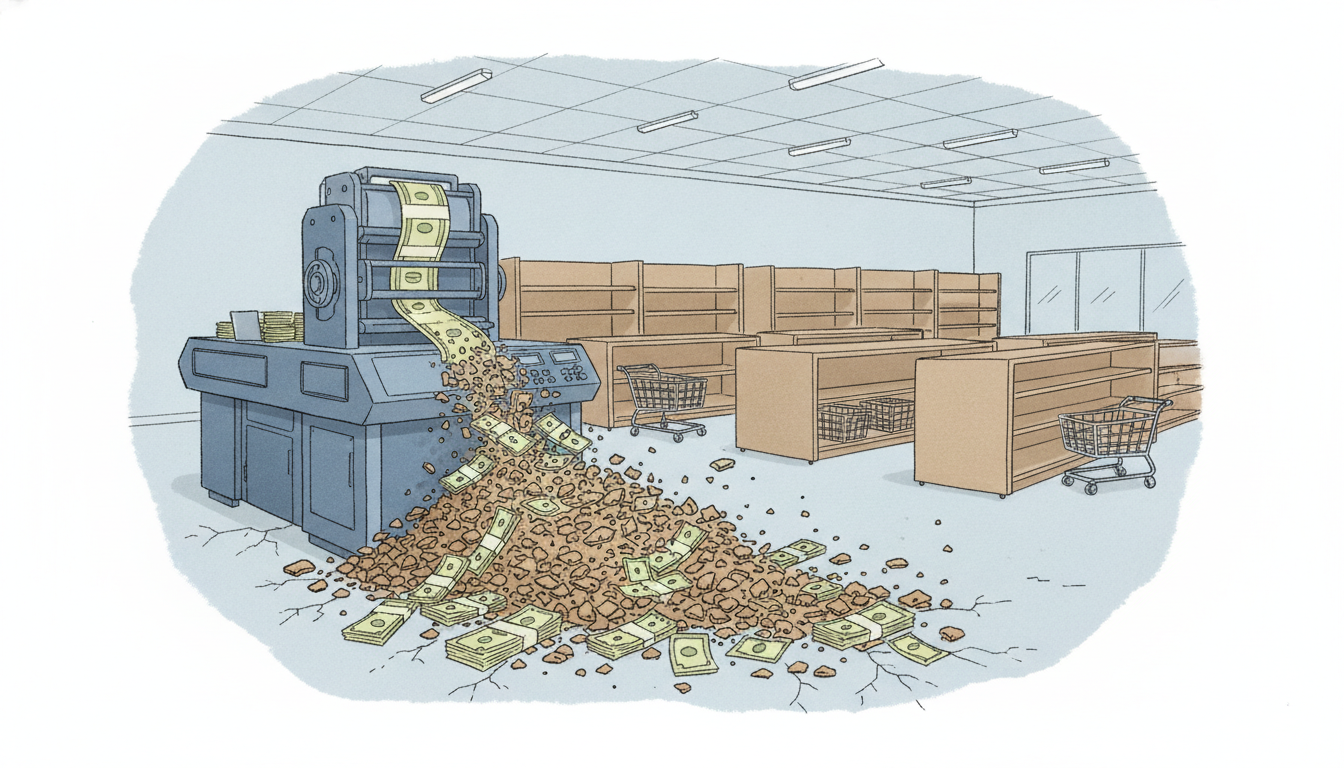
Have you ever wished you could just print all the money you wanted? It sounds like a superpower, right? You could buy all the toys, candies, and games you ever dreamed of! But here's a secret: if countries printed unlimited money, it wouldn't make everyone rich. In fact, it would make things much worse.
Money isn't just paper or coins; it's a tool that helps us trade things. Its value comes from how much stuff—like food, clothes, and services—is available to buy with it. Think of it like this: if there are only 10 apples in a shop, and suddenly everyone has enough money to buy 100 apples, what do you think the shopkeeper will do? They'll make the apples much more expensive because so many people want them!
This is what happens when a country prints too much money without also making more goods and services. It's called **inflation**. When there's a lot more money floating around but the same amount of things to buy, the prices of everything go up. Your money starts to buy less and less.
Imagine your favourite candy bar cost ₹10 last year, but because of too much money being printed, it now costs ₹100! You'd need a lot more money just to buy the same candy. This means your money has lost its **purchasing power**.
In extreme cases, printing too much money can lead to **hyperinflation**. This is when prices rise incredibly fast, sometimes doubling in just a day! A famous example is Germany in the 1920s, after World War I. The government printed so much money that it became almost worthless. People used banknotes as toys or even wallpaper because they were cheaper than real wallpaper! More recently, Zimbabwe in the 2000s and Venezuela in the 2010s also experienced hyperinflation.
To avoid this, countries have special organisations, usually called central banks, that carefully manage how much money is in circulation. They try to keep a balance so that there's enough money for people to use, but not so much that it loses its value. A little bit of inflation, around 2-3% a year, is actually considered a sign of a healthy economy, as it encourages people to spend and businesses to grow. But too much, too fast, can cause big problems.
Knowledge Vault
Money Supply
Money supply is the total amount of money, including physical cash and bank deposits, that is available in an economy at a specific time. Central banks carefully manage this amount to keep the economy stable.
Purchasing Power
Purchasing power is how much goods and services your money can buy. If prices go up, your money's purchasing power goes down because you can buy less with the same amount of money.
Central Bank
A central bank is a special financial institution that manages a country's money supply, controls interest rates, and oversees other banks to keep the economy healthy and stable.
Quick check
Three questions
Check your understanding with three questions about this story.
Practice for fun. Ask a parent to create a free family account to save your scores and badges.
What is the main problem caused by a country printing too much money without increasing goods and services?
- People become much richer instantly.
- Prices of goods and services go down.
- Money loses its value, and prices go up.
- There are suddenly more goods available to buy.
Which of these countries experienced hyperinflation in the 1920s, where money became almost worthless?
- India
- Germany
- United States
- Japan
Who is usually responsible for managing how much money is in circulation in a country?
- The President or Prime Minister
- The central bank
- Everyday citizens
- Shopkeepers and business owners
Choose your answers and check your score in the interactive quiz when it finishes loading.