
New COVID-19 Variant PJ.2.1, Nicknamed "Cicada," Spreads Globally
A new COVID-19 variant, PJ.2.1, informally called "Cicada," was first found in Canada in May 2026 and has since spread to many countries. Doctors are urging calm, as current data does not show it causes more severe illness, but continuous monitoring is important.
By The Junior Post
Published
Recommended for ages 10+. Editorial guidance, not a guarantee of individual suitability.
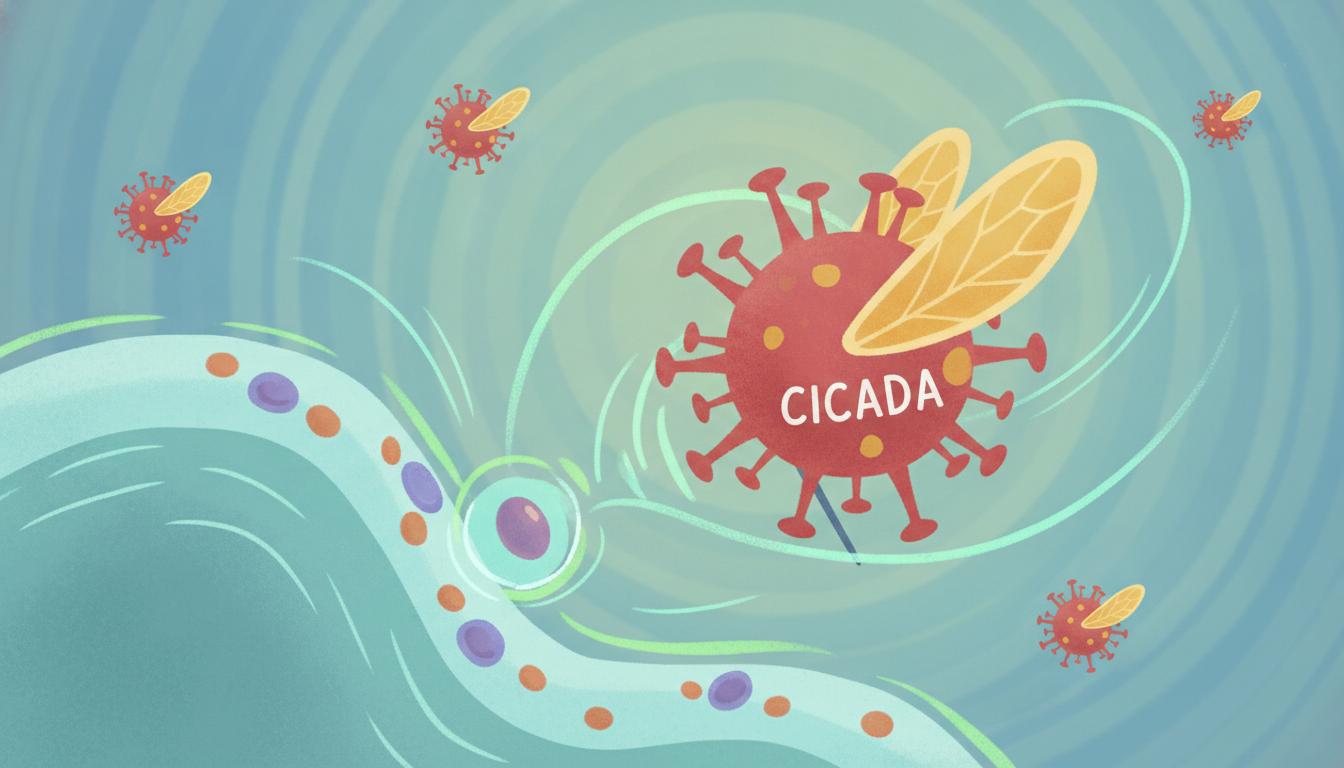
A new COVID-19 variant, known as PJ.2.1, has been identified and is now being monitored by health experts worldwide. This variant, informally nicknamed "Cicada" by researchers, was first found in Ontario, Canada, in May 2026. Since then, cases have been reported in several countries, including the US, Europe, Australia, and parts of Asia, such as Singapore and Israel.
PJ.2.1 is described as a "saltation variant," which means it appeared with many genetic changes all at once, rather than changing slowly over time. It has a highly mutated spike protein, which is the part of the coronavirus that helps it enter human cells. Dr. Amit Saraf, director of internal medicine at Jupiter Hospital Thane, noted that this variant interacts more efficiently with the ACE2 receptor, a protein on human cells that the virus uses to get inside. Laboratory experiments have shown it is better at entering certain cells.
The common symptoms of PJ.2.1 can be similar to those of the common cold, seasonal flu, or other breathing infections. These symptoms include fever or chills, cough, sore throat, runny or blocked nose, headache, muscle aches, and tiredness. Some people might also experience shortness of breath, stomach problems, or changes in their sense of smell and taste. Because the symptoms are so similar, diagnostic testing is important to know if someone has COVID-19, especially when deciding on treatment.
World Health Organization (WHO) officials and doctors say that current information from laboratories and hospitals does not show that PJ.2.1 causes more severe COVID-19 or increases the risk of needing hospital care or death compared to earlier variants. Most cases are expected to be mild. However, older adults, people with diabetes, heart or lung conditions, and those with weaker immune systems are advised to be extra careful because they are more likely to have serious problems from respiratory infections.
Doctors are urging people to remain calm but also to continue monitoring the situation. Sensible precautions include wearing a well-fitting mask in crowded or poorly ventilated places, making sure indoor areas have good airflow, and washing hands often. While the variant has many changes that could help it avoid antibodies from vaccines, research also suggests that vaccine antibodies still offer some protection.
Knowledge Vault
Virus Variants
Viruses, like the one that causes COVID-19, can change over time. These changes are called mutations. When a virus collects enough mutations, it can become a new version, or 'variant.' Some variants might spread more easily, cause different symptoms, or react differently to medicines or vaccines. Scientists monitor these changes to understand how viruses evolve and how to best protect people.
Spike Protein
The spike protein is a part of the coronavirus that sticks out from its surface, like tiny keys. These 'keys' help the virus unlock and enter human cells by attaching to specific receptors, like the ACE2 receptor. Changes in the spike protein can affect how well the virus enters cells and how easily it can be recognized by the body's immune system.
ACE2 Receptor
The ACE2 receptor is a protein found on the surface of many human cells, including those in the lungs, heart, and blood vessels. It acts like a 'lock' that the coronavirus's spike protein 'key' can fit into. When the virus binds to the ACE2 receptor, it can then enter the cell and start to multiply, causing infection.
Check your understanding
- What makes the PJ.2.1 variant different from earlier versions of the COVID-19 virus?
- It was first found in Australia.
- It has a highly mutated spike protein and interacts more efficiently with the ACE2 receptor.
- It only causes changes in sense of smell and taste.
- It is the first variant to cause a cough.
- Why is diagnostic testing important for PJ.2.1, even if symptoms are mild?
- To find out if the variant causes new types of headaches.
- Because its symptoms are very different from the common cold or flu.
- To distinguish between COVID-19, flu, or a cold, especially when treatment decisions depend on it.
- To confirm that the variant only affects older adults.
- According to the article, what is currently known about the severity of PJ.2.1 compared to earlier COVID-19 variants?
- It causes much more severe illness and higher hospitalization rates.
- It only affects children and causes very mild symptoms.
- Current data shows no clear difference in severity, and most cases are expected to be mild.
- It is known to be completely harmless to everyone.